
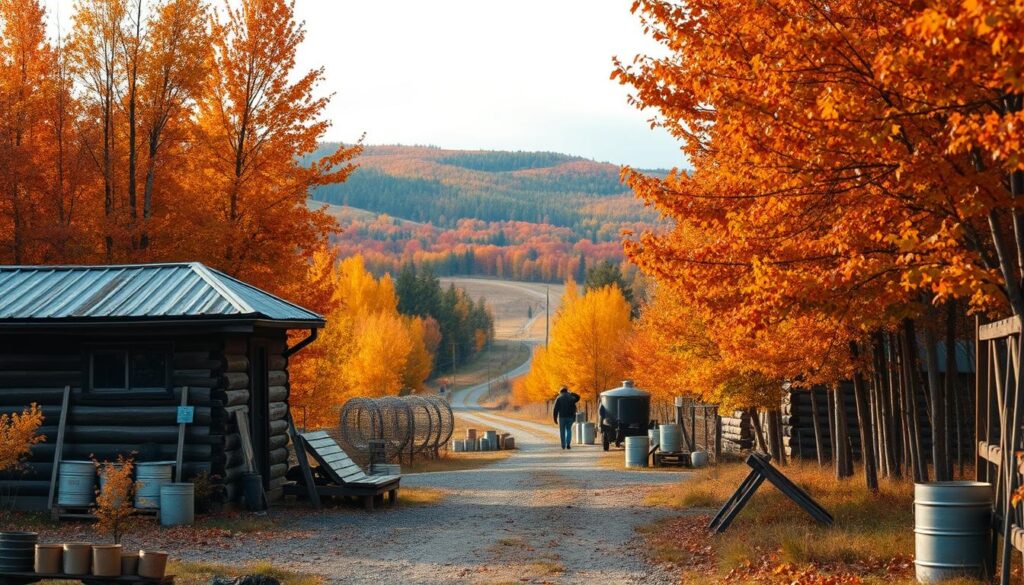

Canada is the world’s biggest producer of maple syrup, making 80% of it. This sweet liquid is more than just a flavor enhancer. It’s a cultural treasure and a key part of Canada’s economy.
Maple syrup is made from the sap of maple trees. Every spring, sugarmakers in Quebec, Ontario, and the Maritime provinces turn forests into maple syrup zones. They capture nature’s sweetest gift.
Learning about maple syrup starts with its amazing journey. From the tree to your table, it needs skill and precision. Producers tap trees at the right time, collecting sap that turns into the famous amber syrup.
Maple syrup is more than a sweetener; it supports many Canadian families. The process involves old traditions and new tech. It’s a blend of past and present.
Collectors watch the weather, tree health, and sap flow closely. The right mix of cold and warm weather makes sap flow. This makes maple syrup production a dance with nature.
People from all over are drawn to Canadian maple syrup production. It’s a mix of nature, culture, and cooking that amazes everyone. It’s a unique experience that connects us to the land.
Maple syrup is great on pancakes, in baking, or on its own. It’s a true Canadian treat. It’s sweet, rich, and deeply connected to Canada’s landscape.
The Rich Heritage of Canadian Maple Syrup Production
Maple syrup is deeply rooted in Canada’s culture. It combines indigenous traditions with farming skills. Before Europeans came, Indigenous peoples knew how to get maple sap. They used smart methods that started Canadian maple production.
Indigenous groups found maple trees’ sweetness through watching and trying new things. They made special ways to get and use maple sap. They used natural materials for their tools:
- Bark containers for collecting sap
- Stone tools for processing
- Wooden tools for boiling and concentrating syrup
Indigenous Peoples’ Historical Connection to Maple Sap
Native tribes in northeastern North America saw maple trees as important. First Nations groups made sap collection a big part of their culture. This started a big tradition in Canada.
Evolution of Maple Syrup Making Techniques
Maple syrup making changed with new tech. Old ways were replaced by better ones. Now, we use metal taps, better boiling setups, and big networks to make more syrup.
Cultural Significance in Canadian Identity
Maple syrup is more than food in Canada. It shows Canadian strength, creativity, and love for nature. It shows the mix of indigenous traditions and new farming ideas.
Understanding Maple Syrup in Canada: A Complete Guide
Pure Canadian maple syrup is a culinary treasure. It comes from the magical transformation of maple tree sap into a golden liquid. This process needs the right environmental conditions and expert craftsmanship found in maple syrup in Canada.
Canadian maple syrup production focuses on specific maple tree species. Sugar maples are the main ones, found in certain regions. These trees need specific climate conditions for the best sap collection.
- Sugar maple trees provide the highest quality sap
- Ideal temperature ranges between freezing and 40°F
- Regions like Quebec dominate maple syrup production
The grading system for pure Canadian maple syrup shows its quality. It’s based on color and flavor intensity. Producers watch every step to make sure only the best syrup gets to consumers.
| Maple Syrup Grade | Color | Flavor Profile |
|---|---|---|
| Golden | Light | Delicate |
| Amber | Medium | Rich |
| Dark | Deep | Robust |
Maple syrup is more than a sweetener. It’s a symbol of Canadian agricultural skill and natural wealth.
Quebec: The Heart of Canadian Maple Production
Quebec is the top producer of maple syrup in Canada, making up 72% of the world’s syrup. Its special landscape and climate are perfect for maple syrup farming. These farms are key to the region’s agricultural success.
Leading Production Regions
Quebec’s maple syrup is mainly made in several areas. The biggest production happens in:
- Montérégie
- Lanaudière
- Mauricie
- Outaouais
Economic Powerhouse of Maple Farming
Quebec’s maple farms have a big impact on the economy. They add over $500 million each year to the province’s income. The industry also creates thousands of jobs and is a vital part of agriculture.
Local Maple Farming Communities
Small, family-run farms are the heart of Quebec’s maple syrup industry. These farms keep traditional methods alive while using new tech to improve. They make the industry more productive and sustainable.
“Our maple farms are more than a business—they’re a heritage passed down through generations,” says Martin Trudel, a fourth-generation maple producer.
The dedication of these communities keeps maple syrup farming alive and growing. It’s a tradition that gets noticed and loved around the world.
The Science Behind Maple Sap Collection
Harvesting maple sap in Canada is a fascinating process. It’s based on scientific principles. The journey of maple syrup starts with the unique biology of sugar maple trees. These trees allow sap to flow during specific environmental conditions.
The sap collection process depends on temperature. Sugar maple trees store carbohydrates in winter. This creates the perfect conditions for maple syrup in Canada. When temperatures change, the tree’s internal structure changes too.
- Nighttime temperatures drop below 32°F (0°C)
- Daytime temperatures rise above 32°F (0°C)
- Positive root pressure develops
- Sap begins to move through tree tissues
These temperature changes create root pressure. This pressure pushes the stored liquid through the tree. Sugarmakers watch these changes to get the most sap. The sap is mostly water with a bit of sugar, minerals, and organic compounds.
Today, maple sap collection has changed a lot. New technologies like vacuum systems and pipeline networks help. They make harvesting more efficient and reduce harm to the forest.
Traditional vs Modern Harvesting Methods
The art of harvesting maple sap has changed a lot in Canada. Farmers now use advanced methods instead of old ways. They have moved from simple bucket collections to complex pipeline systems.
Old methods were hard work. Farmers had to walk through snowy forests, hanging buckets on trees. They collected sap by hand, which was slow and tiring.
From Bucket Collection to Pipeline Systems
Now, modern maple syrup equipment has changed everything. Farms use tubing systems that link many trees. This lets them:
- Collect sap all the time
- Do less manual work
- Make more syrup
Technology in Modern Maple Farming
New tech has changed how sap is harvested. Farmers use:
| Technology | Purpose | Benefit |
|---|---|---|
| Vacuum Systems | Improve Sap Flow | More Sap |
| Remote Sensors | Check Tree Health | Better Care |
| Data Analytics | Plan Harvesting | More Efficient |
Sustainable Harvesting Practices
Today, Canadian maple farming focuses on caring for the environment. Sustainable harvesting means:
- Not too many taps on one tree
- Using gentle ways to collect sap
- Keeping the forest healthy
This shows how old ways and new tech can help keep maple farming alive in Canada.
Canadian Maple Syrup Grading System

Pure Canadian maple syrup has a detailed grading system. It helps people know the quality and taste of this sweetener. The grading ensures each syrup meets strict standards for color, flavor, and clarity.
The Canadian maple syrup grading system has four main grades:
- Golden Color, Delicate Taste: Lightest grade with mild maple flavor
- Amber Color, Rich Taste: Slightly darker with more pronounced maple notes
- Dark Color, Robust Taste: Deep color with intense maple flavor
- Very Dark Color, Strong Taste: Darkest grade with bold, distinctive flavor
Each grade shows a different stage of maple sap production. It reflects the changes during the harvesting season. The grading considers several important factors:
- Light transmission
- Color intensity
- Flavor complexity
- Mineral content
Sugarmakers watch these factors closely. They make sure pure Canadian maple syrup is of the highest quality. This system helps consumers choose well and keeps Canadian maple syrup’s reputation high.
Inside Canadian Sugar Shacks: From Sap to Syrup
Canadian maple production turns simple sap into golden syrup in traditional maple sugar shacks. These rustic places are the heart of syrup making. Here, old skills meet new methods.
Maple sugar shacks are more than just places to make syrup. They are cultural symbols of Canada’s maple syrup history. Visitors see the amazing change of sap into sweet syrup.
The Boiling Process
The boiling process needs precision and skill. Maple sap, mostly water, is heated to concentrate its sugars. Sugarmakers follow key steps:
- Collect fresh maple sap from trees
- Filter the raw sap to remove impurities
- Heat the sap in large evaporator pans
- Monitor temperature and sugar concentration
- Stop boiling when syrup reaches 66-67% sugar content
Equipment and Techniques
Modern maple production uses special equipment for better efficiency and quality. Reverse osmosis machines and advanced evaporators have changed old ways. They help make syrup faster and more consistently.
Visitor Experiences
Sugar shacks are now big tourist spots, giving visitors a deep connection to maple syrup making. Guests can take tours, taste syrup, and learn how it’s made.
“Each drop of maple syrup tells a story of tradition, skill, and natural wonder.” – Canadian Maple Producers Association
Organic Maple Syrup Production Standards
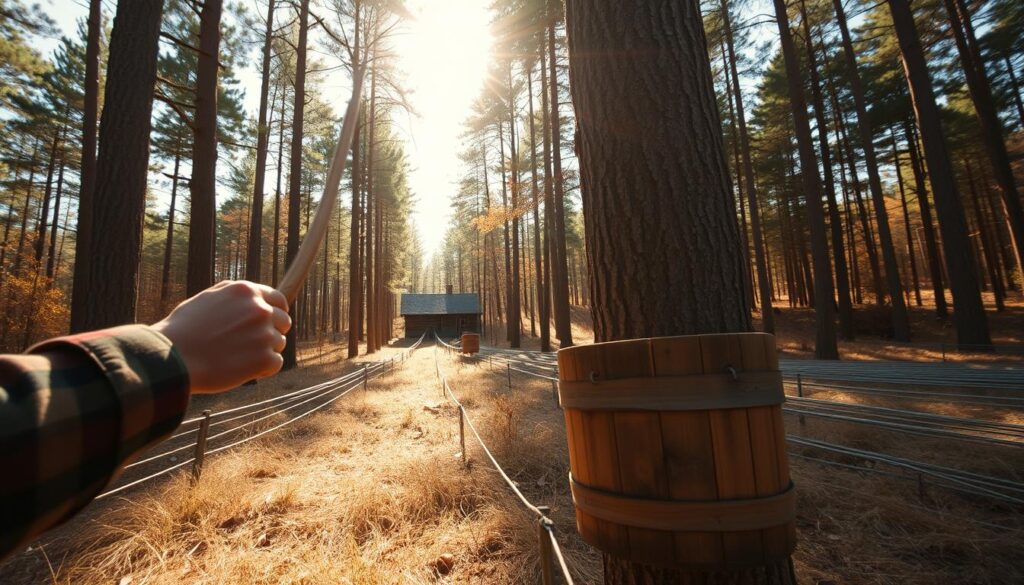
Organic maple syrup is the top choice for those who care about the environment. Canadian makers follow strict rules to make pure maple syrup. They check how forests are managed and how syrup is harvested.
The main rules for making organic maple syrup are:
- No synthetic chemical treatments in maple forest ecosystems
- Strict monitoring of forest biodiversity
- Sustainable tapping practices that protect tree health
- Regular environmental impact assessments
Those who make organic maple syrup must follow strict guidelines. These rules help keep the natural maple forests healthy. They focus on keeping the forest ecosystem balanced and safe.
“Organic maple syrup is not just a product, it’s a commitment to environmental stewardship.” – Canadian Maple Producers Association
The process to get certified involves several steps:
- Initial forest assessment
- Detailed documentation of harvesting practices
- Comprehensive soil and water testing
- Annual environmental compliance reviews
More and more people want organic maple syrup for its natural taste and eco-friendly production. Canadian producers lead the way in making maple syrup that’s good for the planet. They meet the highest organic standards.
Seasonal Maple Festivals and Tourism
Maple syrup in Canada turns into a lively cultural event every year. Thousands of people come to these festivals. They get to see the rich maple production traditions and enjoy real Canadian culture.
Maple syrup festivals across Canada are a chance to dive into the country’s sweet history. Visitors can try many fun activities. These activities make maple traditions come alive.
Popular Festival Locations
- Quebec’s Monteregie Region: Known for the best maple syrup festivals
- Ontario’s Lanark County: Called the “Maple Syrup Capital of Ontario”
- New Brunswick’s maple-rich communities
Traditional Activities and Celebrations
Maple syrup festivals give visitors a real taste of Canadian farming traditions. They can:
- Try maple taffy pulling on snow
- Enjoy pancake breakfasts with fresh maple syrup
- Go on guided tours of sugar bushes
- Watch traditional music and dance performances
Tourist Impact on Local Communities
These maple syrup festivals help local communities a lot. They support local farmers and artisans. This creates jobs and helps keep cultural traditions alive while boosting the local economy.
“Maple syrup festivals are more than just events—they’re a celebration of Canadian identity and agricultural tradition.”
Maple Syrup Storage and Preservation
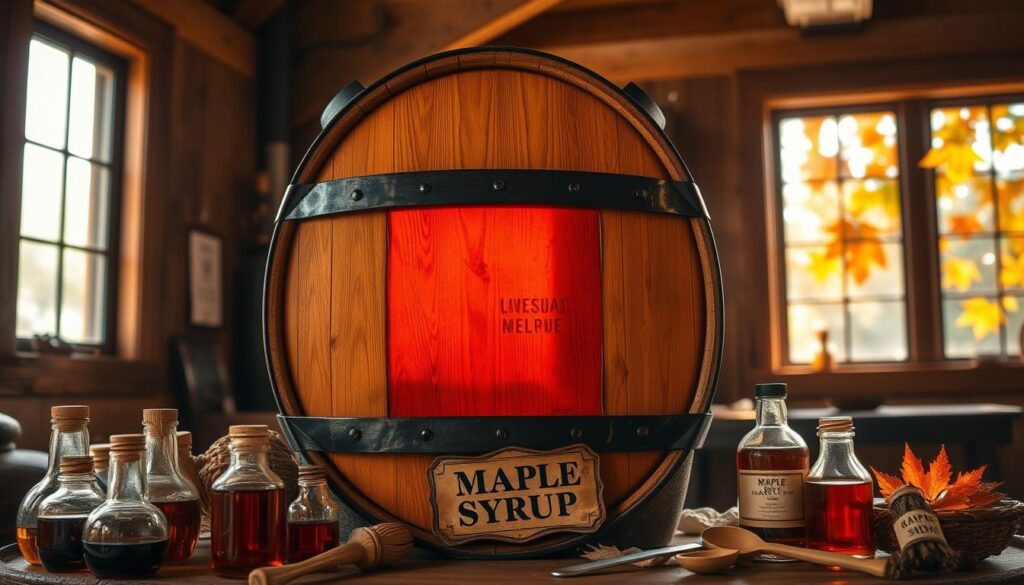
Storing pure Canadian maple syrup needs careful attention. This keeps its rich flavor and quality. The right storage methods can make your maple syrup last longer.
Choosing the right container is key. Glass containers are the best for maple syrup. They keep the syrup’s color and prevent bad flavors.
- Unopened maple syrup can be stored at room temperature
- Refrigerate after opening to prevent spoilage
- Freeze for long-term preservation (up to 1 year)
Maple syrup lovers should know about storage challenges. Crystallization can happen if the syrup is too sweet. But, you can fix it by gently warming it up. Mold growth is another issue that can be avoided with proper storage.
| Storage Method | Temperature Range | Preservation Duration |
|---|---|---|
| Room Temperature (Unopened) | 68-72°F | Indefinite |
| Refrigerated (Opened) | 32-40°F | Up to 1 Year |
| Frozen | 0°F or Lower | 1-2 Years |
To keep your maple syrup at its best, use clean utensils and seal the container well. Good storage keeps the syrup’s amazing taste and nutrients.
Health Benefits and Nutritional Value
Maple syrup in Canada is more than a tasty sweetener. It has a nutritional profile that stands out. Pure Canadian maple is packed with good stuff that’s great for your health.
- It has minerals like zinc and manganese
- It’s full of antioxidants for cell health
- It has trace vitamins and amino acids
- It has a lower glycemic index than refined sugars
Natural Compounds and Antioxidant Power
Studies show pure Canadian maple has about 24 antioxidants. These natural compounds fight oxidative stress and may lower inflammation. Darker maple syrup has more antioxidants.
Comparative Nutritional Analysis
Maple syrup in Canada is different from other sweeteners. It’s not just empty calories like processed sugars. It has minerals and compounds that set it apart from corn syrup or white sugar.
Maple syrup is not a health food, but a more nutrient-dense sweetener option.
Nutrition experts say to enjoy maple syrup in moderation. It’s good for you, but it’s also sugar. Enjoying it in balance is key.
Global Export and Market Impact
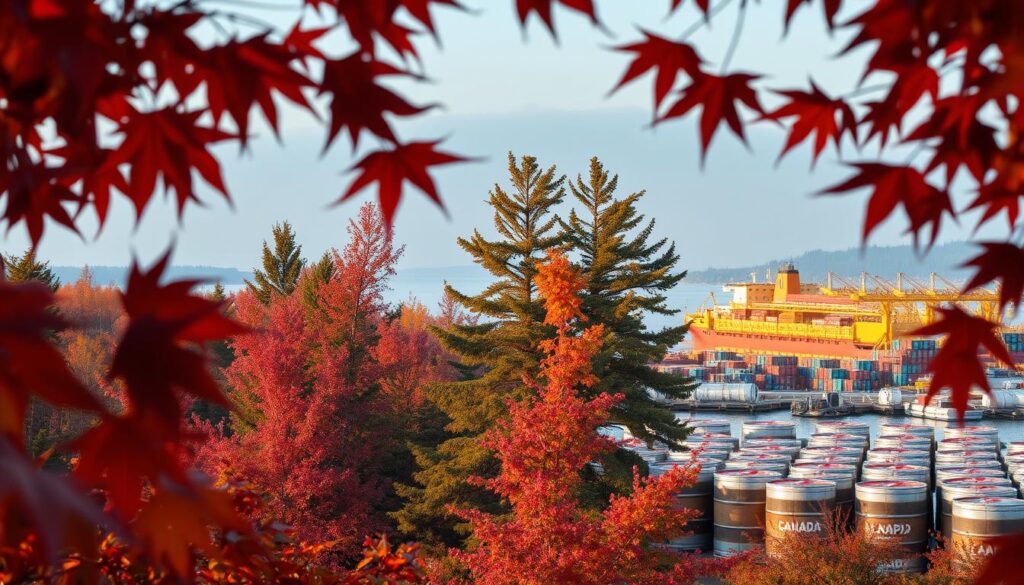
Canadian maple production is a big deal worldwide. It’s not just a tasty treat; it’s a key player in the global economy. It helps the economy in Canada and beyond.
The United States is the biggest buyer of Canadian maple syrup. They get about 70% of the world’s maple syrup. Canadian producers have found ways to keep their market share high. They focus on quality, sustainability, and using the latest technology.
Quebec is the maple syrup leader in Canada. They make about 90% of the country’s syrup. The Federation of Quebec Maple Syrup Producers helps keep prices stable and supply steady.
Export numbers show a big increase:
| Year | Export Value | Global Market Share |
|---|---|---|
| 2019 | $487 million | 75% |
| 2021 | $540 million | 80% |
As more people want maple syrup, Canadian producers keep improving. They make sure they stay the top choice for maple syrup worldwide.
Environmental Factors Affecting Maple Production
Climate change is changing the world of maple syrup in Canada. It’s making big challenges for maple production. Maple tree ecosystems are getting more fragile because of environmental changes. These changes affect the quality of sap and when it can be harvested.
Important environmental factors affecting maple production include:
- Temperature changes that affect sap flow
- Changes in how much rain falls
- More extreme weather events happening more often
- Disruptions to forest ecosystems
Sugarmakers are finding new ways to deal with these problems. Research into climate-resilient maple varieties is key for the industry’s future. They’re also using new forest management to keep maple forests healthy, even with changing weather.
“Our maple forests are more than a resource—they’re a living ecosystem that requires careful stewardship,” says a leading Canadian maple production expert.
Keeping maple forests healthy is important for the environment. These forests make maple syrup and help the planet by capturing carbon dioxide.
Using sustainable practices is becoming more important for maple production. Producers are using new tech and research to understand and fight environmental risks.
Conclusion
Canadian maple production is more than just farming. It’s a deep story of culture and innovation. From ancient traditions to today’s green methods, maple syrup has become a world-famous treat.
The making of maple syrup shows Canada’s love for nature and new tech. Quebec’s maple farms are at the top, showing they can adapt and grow. The hard work of Canadian sugarmakers turns sap into syrup, showing their talent and commitment.
As more people want maple syrup, Canadian farmers are leading the way in green food. They focus on caring for the environment, using new tech, and keeping traditions alive. This ensures maple syrup will keep being a key part of Canada’s identity and farming excellence for years.
Discovering maple syrup is more than just tasting something sweet. It opens a door to Canada’s rich culture, farming skills, and deep connection with nature. This connection is what makes Canada’s spirit so unique.


