


If you love making homemade syrup, a good maple syrup boiling pan is key. It helps turn maple sap into sweet syrup. A durable, stainless steel pan makes the process better and more fun.
Maple syrup has been around for centuries, thanks to North American traditions. In spring, when it’s cold and warm at the same time, sap flows from maple trees. This is the best time to collect it and turn it into syrup. A good boiling pan makes this process smoother, keeping the syrup’s flavor strong.
Choosing the right boiling pan is important for making syrup at home. Stainless steel pans are best because they heat evenly and prevent burning. They’re also easy to clean, making the whole process more enjoyable.
Starting your maple syrup-making journey? Get the right boiling pan to make it fun and efficient. With the right tools, making syrup becomes a special tradition for you and your loved ones.
The Importance of a Maple Syrup Boiling Pan
A maple syrup boiling pan is key in making syrup. It affects the syrup’s quality, how well it’s made, and its taste. The right pan keeps heat evenly, preventing hot spots that can burn the sap and ruin the syrup.
Using the right boiling techniques makes sugars caramelize better. This leads to a richer syrup taste. With the right pan, sugarmakers get better yields and cook faster, making the process smoother.
Choosing a top-notch boiling pan is important. It lets the syrup keep the sap’s natural flavor. The pan’s design and size matter a lot. They affect how well the syrup is made. With the right tools, sugarmakers can make amazing syrup.
| Factor | Impact on Syrup-Making |
|---|---|
| Heat Retention | Minimizes scorching and ensures even cooking |
| Material | Affects flavor and quality through heat distribution |
| Size | Influences cooking time and syrup yield |
| Design | Enhances boiling efficiency |
Choosing the Right Material for Your Boiling Pan
Choosing the right material for your maple syrup boiling pan is key. Each material has its own pros and cons. These affect how well and how good your syrup turns out.
Advantages of Stainless Steel
Stainless steel is a top pick for many sugarmakers. It’s very durable. This means it can handle high heat without bending or changing shape, which is vital for boiling.
It also doesn’t rust or corrode, making it last longer. Plus, it heats evenly, helping to keep syrup quality consistent.
Other Materials to Consider
Stainless steel isn’t the only good choice. Aluminum pans heat up fast, speeding up the boiling start. But, they need more care because they can scratch and warp easily.
Copper pans are great for heat and look good, but they cost more. They also need regular polishing to keep them looking nice.
| Material | Durability | Heat Distribution | Maintenance |
|---|---|---|---|
| Stainless Steel | High | Even | Low |
| Aluminum | Medium | Rapid | Medium |
| Copper | High | Excellent | High |
Understanding the Maple Syrup Boiling Process
The maple syrup boiling process is a detailed journey that turns sap into a sweet treat. It’s key for those wanting to make quality syrup. To make syrup that’s a hit, several important steps must be done carefully.
Steps to Achieve Quality Syrup
Starting with fresh sap from maple trees is the first step. The process includes:
- Filtering the sap to remove impurities.
- Boiling the sap at the right temperatures to evaporate water without burning.
- Using a hydrometer to check the syrup’s density, making sure it meets quality standards.
Each step is vital for making quality syrup.
Common Mistakes to Avoid
Mistakes in syrup-making can be a letdown, affecting the syrup’s taste and clarity. Common errors include:
- Incorrect temperature control during boiling, which can make the syrup taste burnt.
- Not filtering the sap well, leading to impurities in the syrup.
- Boiling the sap too long, making it too thick or bitter.
Knowing these mistakes helps sugarmakers improve their skills, leading to a successful boiling process.
Maple Syrup Boiling Pan: Features to Look For
Choosing the right maple syrup boiling pan is key. It affects how well you boil and the syrup’s quality. Look for pans with large capacities and good designs to improve your syrup-making.
Large Capacity Options
Big boiling pans are great for making lots of syrup at once. They let you boil more sap at once, saving time. Pick a size that fits your syrup-making needs.
Design Considerations
The design of your syrup pan matters a lot. Pans that are shallower boil faster because they have more surface area. This means your syrup can be ready sooner. Also, look for pans with strong handles for easier handling.
| Feature | Benefits |
|---|---|
| Large Capacity | Maximizes sap processing and reduces boiling time. |
| Shallower Design | Increases surface area for quicker evaporation. |
| Reinforced Handles | Enhances ease of lifting and pouring. |
| Compatibility with Outdoor Evaporators | Facilitates versatile boiling methods. |
Stovetop Boiling vs. Outdoor Evaporators
Choosing between stovetop boiling and outdoor evaporators is key for making maple syrup. Each method has its own pros and cons. The right choice depends on how much syrup you want to make and what resources you have.
Pros and Cons of Each Method
Stovetop boiling is great for small batches because it lets you control the temperature well. It’s perfect for watching the sap boil to the right temperature, about 219°F (104°C). But, it takes a lot of time, which can be a problem with big batches.
Outdoor evaporators, on the other hand, are built for making lots of syrup fast. They have a big surface area and strong heat, which speeds up evaporation. But, they need a lot of outdoor space and the weather must be just right.
For a deeper look at the differences and benefits, check out a detailed boiling methods comparison.
Essential Sugaring Equipment for Beginners
Newcomers to maple sugaring need the right tools. The quality and efficiency of syrup-making depend on the right equipment. This includes items that help collect sap and make syrup, making the start easier.
A good sugaring station setup helps organize activities. It keeps things tidy and efficient.
Tools You’ll Need for Maple Sugaring
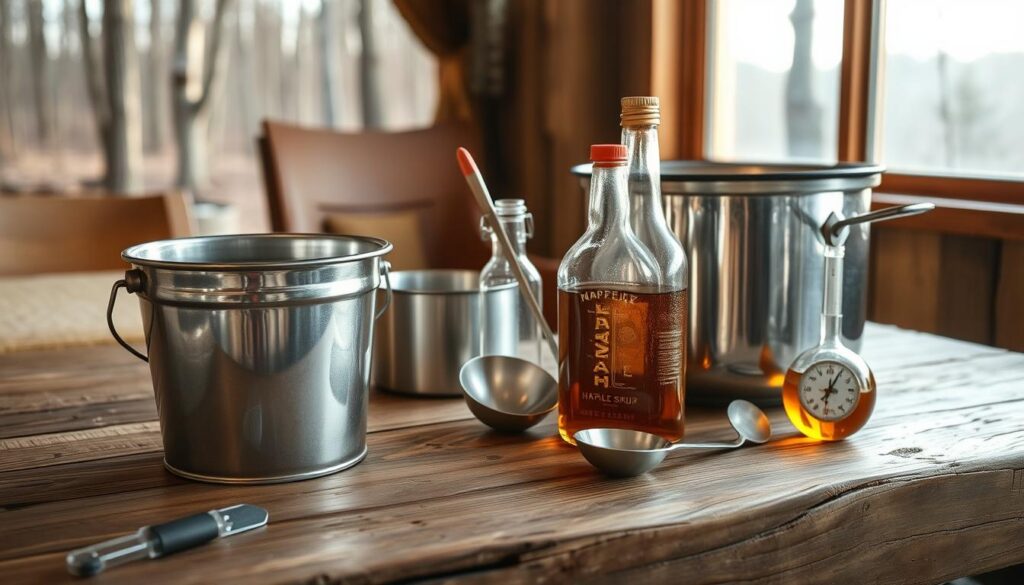
- Maple syrup boiling pan
- Tapping supplies: spouts and buckets
- Filtering materials for sap
- Thermometer for monitoring temperature
- Storage containers for finished syrup
Setting Up Your Sugaring Station
A dedicated sugaring station makes processing easier. It should be well-ventilated, with space for heat sources if boiling indoors. Important things for a good sugaring station setup include:
- Space for maple sugaring tools
- Accessibility to all equipment
- Safety features to manage boiling processes
Buying Guide for Maple Syrup Boiling Pans
Choosing the right maple syrup boiling pan is key to a great syrup-making experience. A good buying guide highlights the importance of size, material, and design. The right pan boosts efficiency and syrup quality.
What to Consider Before Purchasing
Before buying a boiling pan, keep these tips in mind:
- Size: Pick a size that matches your sap needs. Bigger pans boil faster.
- Material: Stainless steel is durable and easy to clean. Copper conducts heat well.
- Design: Look for features like wide bases for even heat and angled sides for better evaporation.
Where to Buy Quality Equipment
Finding good sources for maple sugaring equipment is important. Reputable suppliers offer a variety of options. Local farms and syrup festivals are great for buying and supporting local businesses.
Reading reviews and recommendations from other sugarmakers can help. For more options, check out this guide on where to buy sugaring.
Cost Considerations for a Maple Syrup Boiling Pan
Choosing a maple syrup boiling pan requires looking at different prices. The cost can change a lot based on size and material. Looking for affordable options can help start sugaring without spending too much.
Budget-Friendly Options
If you’re watching your budget, there are good choices that don’t sacrifice function. Affordable syrup pans might include:
- Smaller, lighter stainless steel models
- Aluminum pans that conduct heat well
- Used pans that are in good shape
These options might not last as long or boil as fast. So, you might need to boil syrup for longer.
Investing in Quality
For top-notch syrup, investing in better equipment is key. Quality gear can lead to:
- Quicker boiling, saving fuel
- Better syrup quality from better temperature control
- Longer life, so you won’t need to buy new pans often
Thinking about long-term gains can help decide. For serious sugarmakers, the better performance and syrup quality might be worth the cost.
Seasonal Preparation for Maple Sugaring
Getting ready for maple sugaring is key to a great experience. It starts with collecting all the needed supplies before sap flows. Sugarmakers need to gather tools like boiling pans, sap containers, and tap kits early.
Gathering Supplies in Advance
Making a checklist helps a lot. It keeps sugarmakers organized and lets them enjoy the process more. Here’s what to include:
- Boiling pan
- Sap storage containers
- Tapping tools (drill and spiles)
- Thermometers for checking syrup consistency
- Fire pit or alternate heat source
Having everything ready saves time and boosts efficiency during the busy season.
Timing Your Maple Sugaring Season
Knowing when to start sugaring is also important. The season begins when it’s cold at night but warm during the day. Watching the weather helps get the most sap and syrup quality. Remember, the sap collection time is short. For more tips, check out guidelines on timing maple sugaring.
With good preparation, like getting supplies early and knowing the season’s timing, sugarmakers can make delicious maple syrup.
Benefits of Homemade Maple Syrup
Homemade maple syrup is a better choice than store-bought syrup. It’s pure, without preservatives or artificial additives. This makes it a healthier option that keeps the natural taste and nutrients of maple sap.
Healthier than Store-Bought Options
Maple syrup is healthier because it has fewer calories and more minerals. It’s full of manganese, zinc, and antioxidants. Its natural production keeps its flavor complex, often better than factory-made syrups.
Recipes Featuring Your Homemade Syrup
Homemade syrup lets you explore new recipes. Here are some ideas:
- Pancakes and waffles with a drizzle of syrup
- Marinades for grilling meats or veggies
- Bedtime teas sweetened for cozy nights
- Baking treats like cookies or muffins
- Salad dressings for a sweet touch
Care and Maintenance of Your Maple Syrup Boiling Pan
Proper care for boiling pans is key to their long life and best performance. A well-kept maple syrup boiling pan makes syrup-making better and saves your money. Cleaning and storing it right can make it last longer.
Cleaning Tips for Longevity
Cleaning your maple syrup pans after each use is vital. To get rid of residue and stop corrosion:
- Use warm, soapy water to wash the pan well.
- For hard stains, a soft scrubbing pad works.
- Rinse the pan well to get rid of soap.
- Dry it right away with a soft cloth to stop water spots.
Storage Suggestions
Storing your pan right is also important. Remember these tips:
- Keep the pan in a dry place to avoid moisture damage.
- Don’t put it near harsh chemicals or corrosive stuff.
- Use a protective cover if you’ll store it for a long time.
By following these tips, your maple syrup boiling pan will stay in great shape. It’ll be ready for the next syrup season.
| Cleaning Method | Recommended Use |
|---|---|
| Warm Soapy Water | Regular cleaning after each use |
| Gentle Scrubbing | Removing tough stains |
| Soft Cloth Drying | Preventing water spots |
| Protective Cover | Long-term storage |
Traditional Techniques in Maple Syrup Production
Maple syrup production has a rich history. Many modern sugarmakers stick to traditional methods passed down through generations. They use wooden buckets and simple metal taps, keeping the historic maple sugaring alive.
This approach is common in smaller, artisanal operations. Here, the focus is on quality and flavor, not just quantity.
Historic Methods Used Today
The beauty of historic methods in maple syrup production is their simplicity and success. Sugarmakers choose these old ways to make syrup that truly reflects their region’s taste. They tap trees with basic tools and let nature take its course.
This keeps them connected to the land and the syrup-making tradition.
Handmade Syrup versus Commercial Production
The debate between handmade and commercial syrup is ongoing. Handmade syrup often has unique flavors, thanks to traditional boiling and personal care. On the other hand, commercial syrup uses advanced technology for faster production.
This modern method may produce more syrup but might miss the artisanal touch that many want.
Innovative Practices in Maple Sugaring
Maple sugaring is changing thanks to new methods. These aim to make syrup production better and greener. Modern ways help make syrup more efficiently and with less harm to the environment.
New Technologies Transforming Maple Syrup Production
New techniques are key for sugarmakers wanting to make more syrup with less effort. Tools like reverse osmosis systems help concentrate sap before boiling. This cuts down energy use and shortens boiling times, making syrup making faster and more efficient.
Environmental Considerations
Many sugarmakers are also focusing on being kinder to the planet. They use eco-friendly materials and tap trees in ways that hurt them less. These steps help manage resources better and meet the demand for green products. For more on sustainable sugaring, check out this resource.
Common Questions About Maple Syrup Boiling Pans
Many people ask about the best material and size for a maple syrup boiling pan. They want to know if stainless steel, aluminum, or copper is better. Each has its own benefits, like how well it heats, how easy it is to clean, and how long it lasts.
Choosing the right size pan is also a big question. Users wonder how much sap they can boil at once. A bigger pan can handle more sap but needs more heat and space. Beginners might start with smaller pans to keep things simple.
Questions about keeping the pan clean are common too. A clean pan means better-tasting syrup. It’s important to avoid harsh cleaners that can scratch the pan.
Some people also compare outdoor evaporators to stovetop methods. Outdoor units are better for big batches because they evaporate sap faster. Stovetops are good for smaller amounts.
For beginners, the best pan depends on their experience and goals. Simple designs make boiling syrup easier.
Conclusion
Choosing the right maple syrup boiling pan is key for making top-notch homemade syrup. It’s important to know the benefits of different materials and what features are essential. Also, keeping the pan in good shape is vital.
By being well-prepared and using new methods, sugarmakers can make syrup that’s truly special. They can mix old traditions with new ideas to make syrup that’s both delicious and unique. These concluding thoughts on boiling pans show how important the right tools and methods are for making great syrup. This journey not only connects them with nature but also adds to their cooking skills.


