
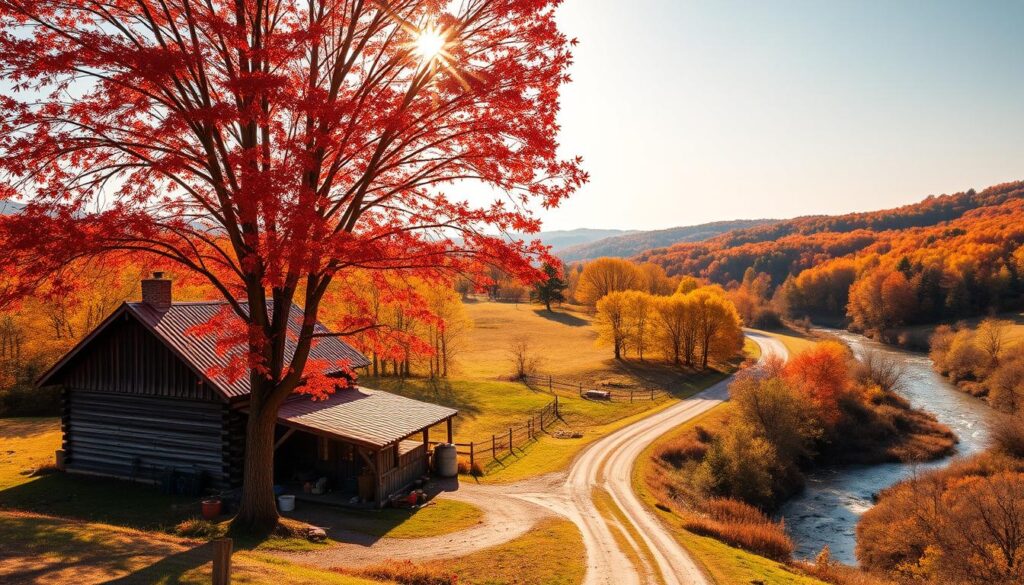

Pennsylvania maple syrup is a culinary treasure. It’s deeply rooted in the state’s agricultural heritage. Sugarmakers have turned tree sap into liquid gold for generations.
The journey of Pennsylvania maple syrup starts in dense, rolling forests. Sugar maple trees thrive here. They produce a sweet nectar that turns into a natural sweetener loved by many.
Each drop of Pennsylvania maple syrup is a result of careful work. Sugarmakers tap trees during a short winter-to-spring period. They collect sap that will become a premium product known for its rich flavor and quality.
Pennsylvania maple syrup is more than a condiment. It shows the state’s agricultural strength. It’s a sustainable practice that supports local economies and keeps a tradition alive.
From the Northern Tier to the Pocono Mountains, Pennsylvania’s landscape is perfect for maple syrup. Each region’s terroir adds unique characteristics to the syrup. This makes Pennsylvania maple syrup a special culinary experience.
This guide will take you into the world of Pennsylvania maple syrup. We’ll explore its production, varieties, uses, and the artisans who make it an art form.
The Rich Heritage of Pennsylvania Maple Syrup
Pennsylvania’s maple syrup tradition is deep and rich. It started with Native American communities who first found the sweet sap of maple trees. They created early methods to make authentic Pennsylvania maple syrup, turning a natural gift into a treasured food.
Early settlers learned from Native Americans and improved their syrup-making skills. They saw the dense maple forests in Pennsylvania as key to their economy and culture.
- Native Americans first found how to extract maple sap.
- European settlers then made maple syrup production better.
- Pennsylvania’s forests were perfect for growing maple trees.
For many years, Pennsylvania farmers kept the maple syrup craft alive. They use both old wooden buckets and new tech to make sure each syrup batch is top-notch.
By keeping old ways and using new tech, Pennsylvania maple syrup is a gold standard. Local makers keep their ancestors’ traditions alive, making syrup that’s a symbol of their farming skills.
“Maple syrup is more than a sweet treat—it’s a connection to our agricultural heritage,” says a local Pennsylvania maple producer.
Now, Pennsylvania maple syrup is more than just a food. It’s a tradition that links the past to today through its deep flavor and old-making ways.
Understanding Pure Pennsylvania Maple Products
Pennsylvania maple syrup is a treasure of natural sweetness and skill. It’s more than just a sweetener. It comes from family farms and big producers, showing Pennsylvania’s dedication to quality.
Grade Classification and Quality Standards
Pure Pennsylvania maple syrup is graded by color and taste. This system helps people know what they’re getting:
- Golden Color, Delicate Taste: Lightest grade with subtle maple flavor
- Amber Color, Rich Taste: Medium-intensity maple notes
- Dark Color, Robust Taste: Strongest maple flavor profile
| Syrup Grade | Color | Flavor Intensity | Best Uses |
|---|---|---|---|
| Grade A Light | Pale Gold | Mild | Baking, Pancakes |
| Grade A Medium | Amber | Moderate | Cooking, Glazes |
| Grade A Dark | Deep Brown | Strong | Marinades, Barbeque |
Different Maple Syrup Forms and Products
Pennsylvania maple makers create many pure maple products. You can find maple sugar, maple cream, and maple candies. These items show how versatile maple syrup is in cooking.
Nutritional Benefits and Properties
Pure Pennsylvania maple syrup is tasty and good for you. It has zinc and manganese, and is better than refined sugar. It’s also less likely to raise blood sugar levels.
- Rich in antioxidants
- Contains trace minerals
- Natural alternative to processed sugars
The Pennsylvania Maple Syrup Production Process
Making homemade Pennsylvania maple syrup is a detailed art. It turns tree sap into golden syrup. First, the right maple trees are picked, usually sugar maples over 40 years old and 10 inches wide. Sugarmakers tap these trees in late winter and early spring, when nights are cold and days are warm.
The sap collection process has key steps:
- Identifying mature maple trees with healthy bark
- Drilling precise holes for tapping
- Inserting spiles to direct sap flow
- Collecting sap using traditional buckets or modern tubing networks
Pennsylvania maple syrup makers use special methods to get more sap. The sap starts with only 2-3% sugar, needing a lot of boiling to get sweeter. It takes 40 gallons of sap to make just one gallon of syrup.
The sap is heated in big pans to make the syrup’s flavor pop. Sugarmakers watch the temperature closely, keeping it between 219-221 degrees Fahrenheit. This careful heating turns the clear sap into the amber syrup Pennsylvania is famous for.
Grading is important in making Pennsylvania maple syrup. The USDA grades syrup by color and flavor, from golden to very dark. Each grade shows the syrup’s taste and the skill of the maker, based on the maple trees’ conditions.
Best Regions for Maple Syrup in Pennsylvania
Pennsylvania has amazing landscapes perfect for making top-notch maple syrup. The state’s varied geography helps maple trees grow well. This makes some of the best maple syrup in the country.
Pennsylvania has different areas for making maple syrup. Each area has its own special features. These features affect the taste and quality of the syrup.
Northern Tier Production Areas
The Northern Tier is key for maple syrup. It has:
- Cooler temperatures that maple trees love
- Dense forests full of sugar maple trees
- High elevations that help sap flow well
Pocono Mountains Maple Belt
The Pocono Mountains are great for maple syrup. They have:
- Soil that’s rich and drains well
- Winter temperatures that are just right
- Big forests of maple trees
Western Pennsylvania Maple Country
Western Pennsylvania has special places for maple syrup. It stands out because of:
- Different landscapes that support many maple types
- Longer seasons for harvesting syrup
- New ways to make syrup
Every area in Pennsylvania adds its own special touch to maple syrup. This creates a wide range of flavors and ways to make syrup.
Seasonal Timeline for Pennsylvania Maple Syrup
The Pennsylvania maple syrup production has a special seasonal rhythm. It turns winter’s quiet landscape into a place of sweet harvest. Sugarmakers watch the weather closely to find the best time to collect maple sap.
Maple syrup season in Pennsylvania usually lasts from late February to early April. This time is key because certain temperature changes make the sap flow. This flow is what makes traditional maple syrup.
- Late Winter (February): Initial preparation of maple tree tapping equipment
- Early Spring (March): Peak sap collection period
- Late Spring (April): Final syrup production and processing
The sap flows best when daytime temperatures are between 40-50°F and nighttime temperatures are below freezing. These temperature changes create pressure inside the maple trees. This pressure pushes the sap through the trees.
“Every drop of Pennsylvania maple syrup represents a delicate dance between nature and craftsmanship” – Pennsylvania Maple Syrup Producers Association
Pennsylvania maple syrup producers work hard for months before the harvest. They check and fix tapping lines, clean equipment, and get everything ready for the sap collection time.
After the main season, sugarmakers clean and store their gear. They review their harvest and start planning for next year’s syrup production.
Top Pennsylvania Maple Syrup Producers
Pennsylvania is home to many skilled maple syrup producers. They turn the state’s forests into golden syrup. These artisans have honed their skills over generations.
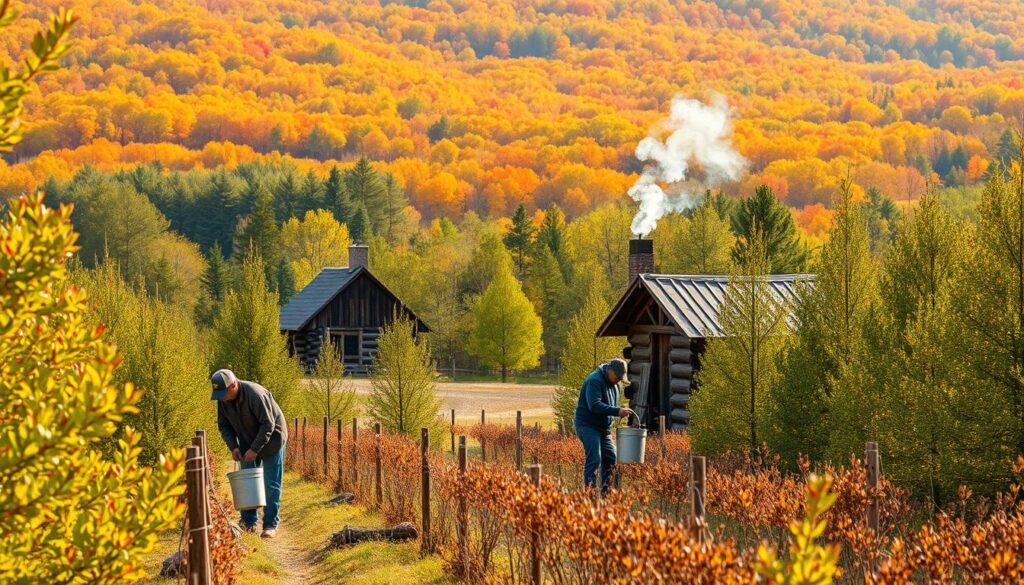
The maple syrup industry in Pennsylvania is a mix of tradition and new ideas. Small family farms and big commercial producers all aim for quality and realness.
Family-Owned Operations: Guardians of Tradition
Family farms are at the core of Pennsylvania’s syrup making. These dedicated farmers keep old methods alive, passed down through generations.
- Multi-generational expertise in maple syrup production
- Commitment to sustainable harvesting methods
- Personal connection to land and maple trees
Commercial Producers: Scaling Quality
Bigger commercial producers have grown while keeping quality high. They use new tech to stay efficient and keep the maple taste true.
“Our goal is to preserve the pure essence of maple syrup while meeting growing market demands.” – Pennsylvania Maple Syrup Association
Award-Winning Maple Farms
Some Pennsylvania maple farms are known nationwide for their syrup. These farms show off the state’s top maple syrup quality.
- Pine Grove Mills Maple Works
- Bucks County Maple Farms
- Elk County Sugar Shack
These producers help keep Pennsylvania’s maple syrup tradition alive. They make sure old skills stay relevant today.
Where to Buy Maple Syrup in Pennsylvania
Exploring authentic maple syrup in Pennsylvania is a fun journey. You can find it at local farmers’ markets and specialty stores. These places offer direct access to top-quality, locally made syrup.
Looking for where to buy maple syrup in Pennsylvania? Here are the best places:
- Family-owned farm stands in rural Pennsylvania regions
- Local farmers’ markets throughout the state
- Specialty food stores in urban and suburban areas
- Gourmet shops specializing in regional products
Pennsylvania’s maple producers have many ways to buy their syrup. Online marketplaces are great for those who can’t visit farms. Many farms ship their syrup, so you can buy it from home.
When buying maple syrup, look for these signs of quality:
- Check for state certification labels
- Verify the producer’s reputation
- Examine the syrup’s color and clarity
- Compare pricing across different sources
Pro tip: Visit local maple festivals and farm tours. They let you meet Pennsylvania’s maple syrup makers and find special, small-batch syrups.
Authentic vs. Imitation Maple Syrup: Know the Difference
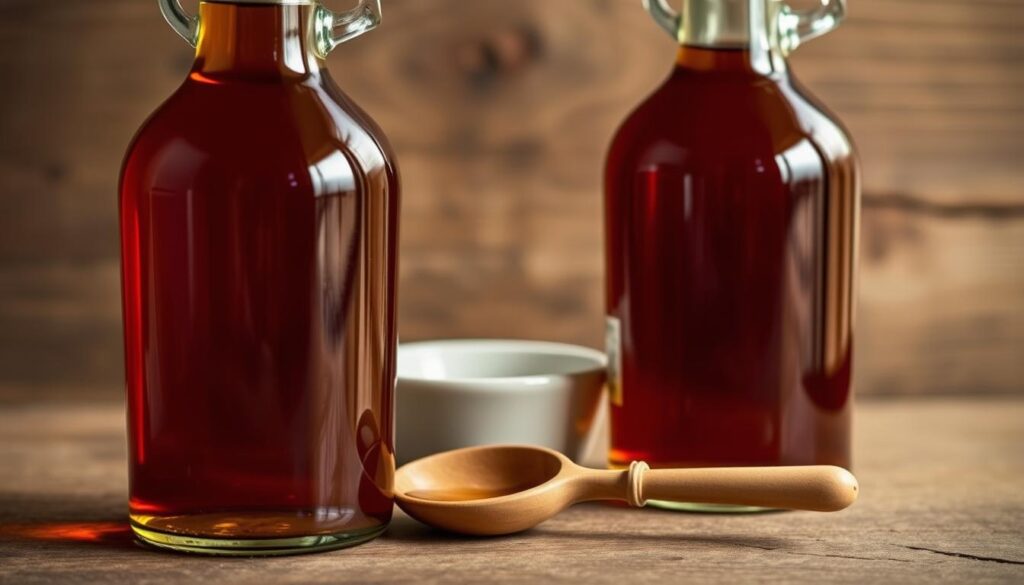
Finding the right maple syrup can be hard. Not all syrups are the same. Knowing the differences helps you choose wisely.
Pure Pennsylvania maple products are different from fake ones. Real maple syrup comes from 100% pure maple sap. It’s carefully taken from maple trees. Fake syrups use corn syrup and fake flavors.
Reading Labels and Certifications
To find real maple syrup, check the labels closely. Look for these signs:
- Ingredient list showing only “Pure Maple Syrup”
- USDA certification marks
- State-specific maple producer certifications
- Transparent production information
Be careful of labels that say “maple-flavored” or have corn syrup. A guide to maple syrup differences can help you choose better.
Price Comparison Guide
Pure maple syrup is pricier because it’s made the hard way. The cost shows the effort and skill in making authentic Pennsylvania maple products.
| Syrup Type | Average Price per Gallon | Production Method |
|---|---|---|
| Pure Maple Syrup | $50-$80 | Traditional Tapping |
| Imitation Maple Syrup | $10-$20 | Industrial Processing |
Choosing real maple syrup supports local farmers and gives you a better, natural product.
Organic Pennsylvania Maple Syrup Options
Organic Pennsylvania maple syrup is a top-notch choice for those who love maple syrup. Farmers in the state use eco-friendly methods to make it. These methods keep the environment safe and the syrup quality high. The organic certification process makes sure maple groves are managed well.
Organic Pennsylvania maple syrup stands out because of its unique features:
- No synthetic pesticides or chemicals used in maple grove maintenance
- Sustainable forest management practices
- Preservation of natural ecosystem biodiversity
- Rigorous third-party certification processes
Pennsylvania sugarmakers who go organic use natural ways to keep maple trees healthy. They manage forests carefully, intervene less, and preserve nature.
| Organic Certification Criteria | Requirements |
|---|---|
| Land Management | Minimum 3-year chemical-free period |
| Tap Equipment | Non-toxic, food-grade materials |
| Processing Standards | No artificial additives or preservatives |
For those looking for organic Pennsylvania maple syrup, there are great options. Family-owned maple farms offer high-quality, eco-friendly syrup.
Maple Syrup Festivals and Events in Pennsylvania
Pennsylvania’s maple syrup community celebrates its heritage with lively festivals. These events bring together maple syrup lovers. They showcase the tradition of making Pennsylvania maple syrup and offer special experiences.
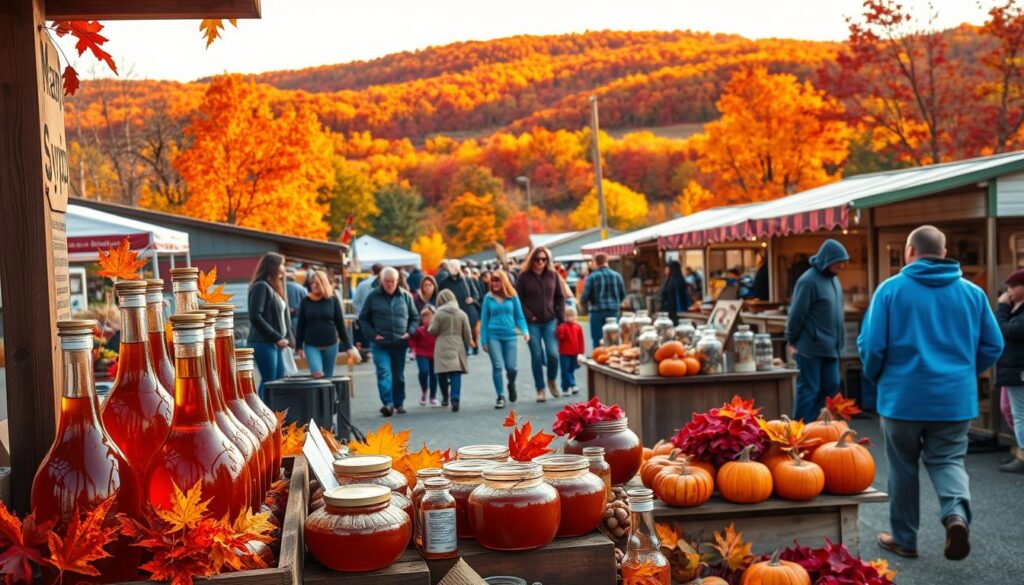
The state has many annual celebrations for maple syrup production. Visitors can dive into the world of local maple syrup in Pennsylvania. They can connect with their agricultural roots through exciting events.
Annual Maple Celebrations
- Maple Weekend in Pennsylvania: A statewide event typically held in March
- Maple Festivals in Crawford, Somerset, and Lycoming Counties
- Pocono Maple Syrup Festival
- Annual Sugar Bush Maple Fest in northwestern Pennsylvania
Touring and Tasting Adventures
Pennsylvania maple syrup fans can explore syrup production up close. Many local farms offer:
- Guided tours of maple sugar operations
- Live demonstrations of sap collection
- Maple syrup tasting experiences
- Educational workshops about maple production
“These festivals are more than just events – they’re a celebration of Pennsylvania’s sweet agricultural heritage!” – Local Maple Producer
Visitors should plan ahead and check event dates. They’ll enjoy exploring Pennsylvania’s maple syrup culture. Each festival gives a unique look at turning tree sap into syrup.
Storage and Preservation Tips for Pure Maple Syrup
Keeping pure Pennsylvania maple products fresh is key. The right storage keeps the syrup’s rich flavor perfect for enjoying.
For the best storage, keep syrup in a cool place. Glass containers are best because they keep the syrup clean and true to its taste.
- Store unopened maple syrup at room temperature
- Refrigerate opened syrup immediately
- Keep syrup between 32°F and 40°F for optimal preservation
Freezing maple syrup is a great way to keep it fresh for longer. Freezing at 0°F can extend its shelf life without losing its taste or nutrients.
It’s important to know when syrup goes bad. Look out for these signs:
- Visible mold growth
- Unusual color changes
- Thick or crystallized texture
- Cloudy appearance
Pro tip: To stop mold, use clean containers and seal them well. When thawing frozen syrup, do it slowly in the fridge or at room temperature to keep it good.
By following these tips, maple syrup fans can keep their syrup tasty for a long time. This way, every sip is as good as the first.
Cooking with Pennsylvania Maple Syrup
Pennsylvania maple syrup turns simple dishes into works of art. It adds a rich, natural sweetness that makes both old and new recipes shine. Chefs and home cooks alike are finding new ways to use this golden liquid.
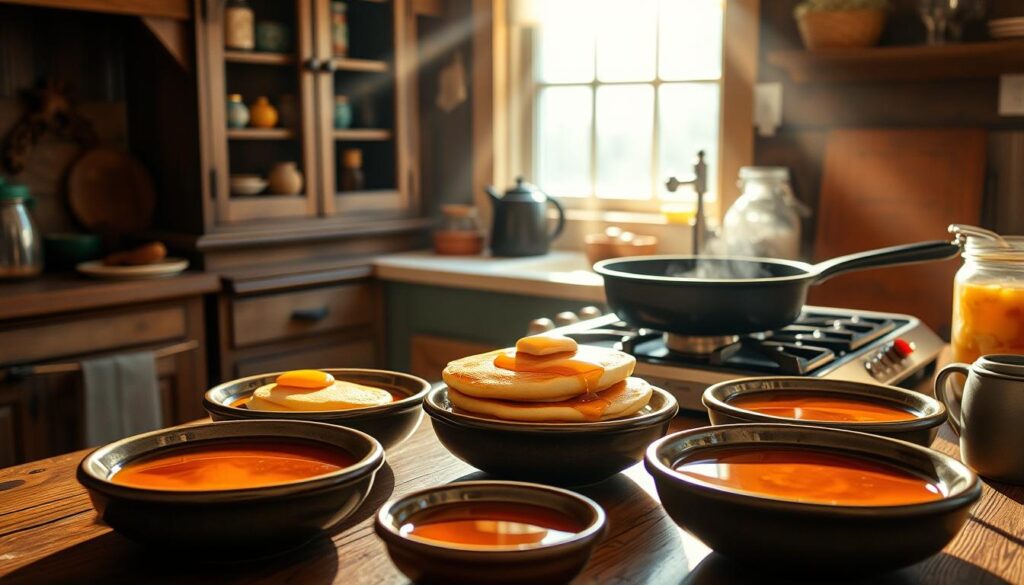
Home cooks can add homemade Pennsylvania maple syrup to many dishes. It’s perfect for both sweet and savory recipes. This makes it a must-have for anyone who loves to cook.
Traditional Family Recipes
Classic Pennsylvania recipes highlight the long history of maple syrup. Some favorite dishes include:
- Maple-glazed ham with a golden, caramelized exterior
- Maple sugar candies made with old techniques
- Hearty breakfasts like maple-infused pancakes and waffles
Modern Culinary Innovations
Today’s chefs are experimenting with Pennsylvania maple syrup. They’re making new dishes that amaze and excite. Maple syrup is great in marinades, and it’s perfect for chicken and pork.
“Maple syrup isn’t just a sweetener—it’s a flavor enhancer that brings depth and complexity to any recipe.” – Pennsylvania Culinary Institute
Creative uses for maple syrup include:
- Using it as a natural sweetener in baking
- As a glaze for grilled meats
- As a flavor booster in salad dressings
- As a unique ingredient in cocktails and drinks
Whether you’re a pro chef or a home cook, Pennsylvania maple syrup opens up a world of possibilities. It celebrates local traditions and encourages creativity in the kitchen.
Environmental Impact and Sustainable Practices
Pennsylvania maple syrup makers are leading the way in green practices. They work hard to protect the environment and their maple forests. This balance between making syrup and keeping forests healthy leads to new ways of tapping maple trees.
They use methods that are kind to the earth. Sugarmakers pick the right trees and use ways that don’t harm the environment:
- Limited tapping per tree to ensure forest health
- Rotating tap locations to prevent tree stress
- Using energy-efficient evaporation techniques
- Preserving woodland ecosystems
Climate change is a big problem for maple syrup makers in Pennsylvania. Changes in weather affect how maple trees grow and make sap. Farmers must find new ways to keep up with these changes.
| Sustainable Practice | Environmental Benefit |
|---|---|
| Reverse Osmosis Technology | Reduces energy consumption by 75% |
| Forest Management | Maintains woodland biodiversity |
| Minimal Invasive Tapping | Protects long-term tree health |
Pennsylvania maple syrup producers are committed to environmental stewardship. They find a way to make money while keeping the earth safe. This ensures maple syrup can be enjoyed by people for years to come.
Economic Importance of Maple Syrup Industry
The Pennsylvania maple syrup industry is key for rural areas. It helps local economies grow. Family farms and regional development get a boost from it.
Maple syrup’s impact goes beyond just numbers. It brings in a lot of money through sales, tourism, and diversifying farms.
Local Economy Benefits
Rural Pennsylvania gets many benefits from maple syrup:
- It creates jobs in farming and related fields
- It brings in money directly to farms
- It opens up agritourism chances
- It keeps traditional farming alive
Industry Growth Statistics
Recent numbers show Pennsylvania maple syrup is growing fast. The state’s production and demand are both rising.
| Year | Production Volume (Gallons) | Economic Value |
|---|---|---|
| 2019 | 140,000 | $4.2 million |
| 2020 | 155,000 | $4.7 million |
| 2021 | 170,000 | $5.3 million |
These numbers show the growing value of Pennsylvania maple syrup. More production and value mean more people want it.
Supporting Local Pennsylvania Maple Syrup Producers
Buying local maple syrup in Pennsylvania is more than just a purchase. It helps keep a valuable farming tradition alive. This tradition supports rural areas and keeps the heritage of maple syrup in Pennsylvania strong.
There are many ways to make a difference:
- Visit local maple farms during sugaring season
- Purchase directly from Pennsylvania maple producers
- Participate in community-supported agriculture programs
- Attend maple syrup festivals and events
Choosing local maple syrup means more than just getting a product. It supports family businesses, promotes eco-friendly farming, and keeps Pennsylvania’s maple syrup tradition alive.
Agritourism is key in supporting these producers. Many offer tours, tastings, and lessons. These experiences let visitors see how maple syrup is made.
“When you buy local, you’re supporting a generational craft that connects us to our agricultural roots.” – Pennsylvania Maple Syrup Association
Your choice to buy local helps keep this special Pennsylvania industry thriving.
Conclusion
Pennsylvania’s maple syrup tradition is a mix of farming skill and natural heritage. The top maple syrup in Pennsylvania comes from sugarmakers who have passed down their craft for generations. They turn maple sap into golden syrup, each drop filled with stories of hard work and respect for the land.
Finding real Pennsylvania maple syrup means connecting with local makers who focus on quality and keeping traditions alive. Places like the Northern Tier and the Pocono Mountains are known for their maple syrup artistry. By choosing local syrup, we support an important industry and enjoy the true taste of Pennsylvania’s maple landscape.
Exploring Pennsylvania’s maple syrup world shows us more than just a tasty treat. It highlights the importance of farming knowledge, caring for the environment, and keeping cultural traditions alive. By supporting these maple syrup producers, we enjoy a better product and help keep a beloved tradition alive in the state.
Trying Pennsylvania’s maple syrup is a chance for food lovers and adventurers to taste regional pride. From fresh syrup to maple products, the state’s industry shows off its farming excellence and dedication to preserving culinary traditions.


