
Maple syrup farming is a mix of old traditions and new chances. It’s perfect for those looking for a unique farm business. This ancient method turns tree sap into a top-notch natural sweetener. It’s loved by chefs and health fans alike.
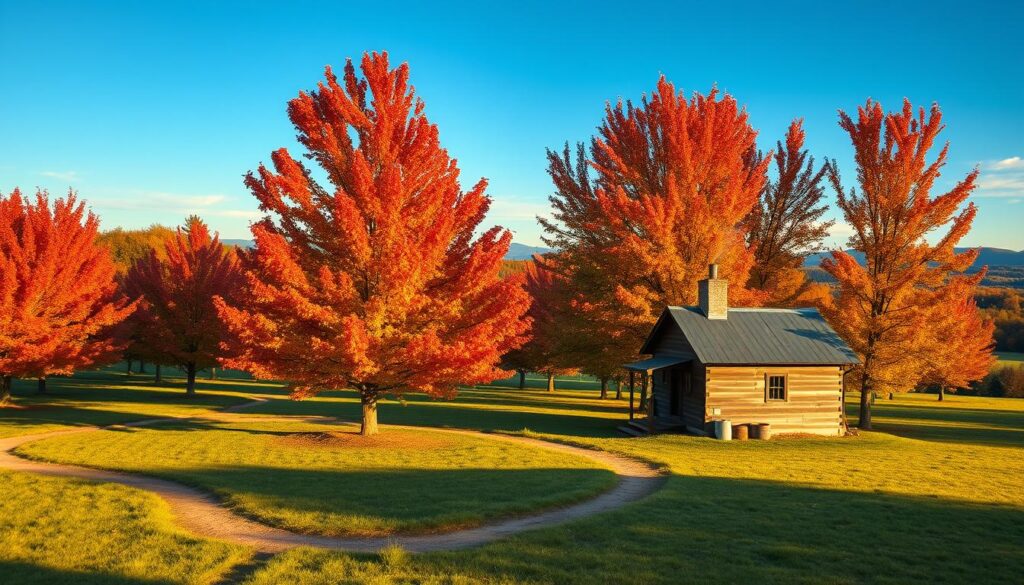
In the northeastern United States, maple syrup farming thrives. The dense maple forests are ideal for this special farming. Farmers can enter a market that loves pure, simple foods. Stores, markets, and fancy restaurants are always looking for the best maple syrup.
To succeed in maple syrup farming, you need to know a lot. You must pick the right trees, collect sap, and process syrup. The rewards are not just money but also joining a long-standing farming tradition. It connects farmers to nature’s cycles.
Every acre of mature maple trees can make a lot of money. Farmers can get 20 to 60 gallons of syrup per acre. This depends on the trees, weather, and how well they manage. Maple syrup farming isn’t just about syrup. You can also make maple sugar, candies, and other special foods.
This guide will help you start a maple syrup farm. You’ll learn how to choose the best trees, collect sap, and understand the market. You’ll turn your love for natural foods into a real farm business.
Understanding the Rich Heritage of Maple Syrup Production
The maple syrup industry has a rich history in North America. It started with Native Americans discovering how to turn maple sap into syrup. This discovery became a key part of their culture and economy.
Native American Origins and Cultural Wisdom
Native American tribes were the first to make maple syrup. They created smart ways to collect and boil sap before Europeans came. Their methods included:
- Making V-shaped cuts in maple tree bark
- Using hollowed-out logs to collect sap
- Heating stones to boil and concentrate the liquid
Evolution of Maple Syrup Techniques
When European settlers arrived, they learned from Native Americans. They used metal tools and better boiling methods. These changes made making maple syrup easier.
Cultural Significance in North America
Maple syrup is more than just food. It connects us to our land, traditions, and each other. Today, the maple syrup industry keeps these traditions alive while using new technology.
“Maple syrup is more than a sweet treat; it’s a living history of North American resourcefulness and cultural exchange.”
Essential Requirements for Starting Maple Syrup Farming
Starting a maple syrup business needs careful planning and the right tools. To succeed, you must know the key parts that turn a forest into a place for making syrup.
Before starting your farm, you need to think about a few important things:
- Land Requirements: You’ll need at least 10-20 acres of mature maple forest.
- Forest Composition: Most of your forest should be sugar maple trees, making up 70-80% of the woodland.
- Tree Health: Your trees should be between 40-100 years old and have the right trunk size.
The cost to start a maple syrup farm can be between $10,000 and $50,000. This money goes towards important tools like:
- Tapping tools and spiles
- Collection systems
- Large evaporation equipment
- Storage and bottling setup
Running a maple syrup business means a lot of work during the sugaring season. This season usually lasts 4-6 weeks in early spring. It’s also important to know the local laws and get the right permits to start legally.
“Success in maple syrup farming comes from patience, knowledge, and understanding the delicate balance of forest ecosystems.”
Before starting, check if you have the right skills and physical strength. Learning how to make maple syrup can be tough. Joining workshops and talking to experienced farmers can help a lot.
Identifying and Selecting the Right Maple Trees
Starting with the right maple trees is key to making good maple syrup. Not every maple tree is good for syrup. Knowing which trees to choose can make a big difference in syrup quality and amount.
Sugar Maple vs. Other Maple Species
Sugar maples are the top choice for syrup, but other types can work too. The Acer saccharum (sugar maple) has the sweetest sap. Red and black maples can also help with sustainable farming.
- Sugar Maple: Highest sugar content (2-3% sugar concentration)
- Red Maple: Moderate sugar content (1-2% sugar concentration)
- Black Maple: Similar characteristics to sugar maple
Tree Age and Health Requirements
Choosing the right maple tree is important. Trees should be at least 10 inches wide before tapping. This usually happens when they’re 40-50 years old.
| Tree Age | Tapping Suitability | Recommended Taps |
|---|---|---|
| 10-20 years | Not recommended | 0 taps |
| 40-50 years | Ideal | 1-2 taps |
| 80-100 years | Prime production | 2-3 taps |
Optimal Tree Spacing and Forest Management
Good forest management is key to sustainable farming. Trees need enough space to grow well and produce sap. They should be 30-40 feet apart for best results.
- Maintain diverse forest ecosystem
- Protect surrounding vegetation
- Practice selective thinning
- Monitor forest health regularly
Modern Equipment and Tools for Maple Syrup Production
Maple syrup production has changed a lot with new technology. Today, sugarmakers use advanced tools to make syrup more efficiently.
Old ways of tapping trees are gone. Now, new systems help make syrup better. These systems include:
- Advanced tubing networks for sap collection
- High-efficiency evaporators
- Reverse osmosis filtration systems
- Digital monitoring equipment
Modern tools make sugarmakers more productive and their syrup better. Vacuum-assisted tubing systems are a big change. They help collect sap better and faster.
| Equipment Type | Key Benefits | Typical Cost Range |
|---|---|---|
| Vacuum Tubing System | Increased sap flow, reduced labor | $5,000 – $25,000 |
| Reverse Osmosis Machine | Concentrates sap, reduces boiling time | $10,000 – $50,000 |
| Modern Evaporator | Efficient heat transfer, precise temperature control | $15,000 – $75,000 |
Digital tech has changed how syrup is made. It lets sugarmakers watch sap flow and sugar levels in real time. They can adjust their work to keep syrup quality high.
The Science Behind Maple Sap Flow and Collection
Maple syrup extraction is a fascinating natural process. It’s based on scientific principles. The maple syrup industry relies on knowing how sap flows through maple trees.
The magic of maple sap collection starts with the unique interactions in maple forests. Trees respond to temperature patterns in a remarkable way. Sugarmakers carefully watch and use this natural phenomenon.
Understanding Freeze-Thaw Cycles
Maple sap flow depends on temperature changes. The best conditions are:
- Nighttime temperatures below freezing (around 28-32°F)
- Daytime temperatures rising above freezing (around 40-45°F)
- Consistent atmospheric pressure changes
Optimal Weather Conditions
Successful maple syrup extraction needs specific weather. Sugarmakers look for:
- Consistent cold nights
- Warm, sunny days
- Minimal wind interference
- Steady barometric pressure
Sap Chemistry and Sugar Content
The chemical makeup of maple sap is amazing. Sugar maples produce sap with 2-5% sugar. This sugar concentration increases during boiling, making the syrup we love.
Knowing these scientific principles helps maple syrup producers. They can maximize their harvest and create high-quality products.
Best Practices in Maple Tree Tapping
Maple tree tapping is a delicate art that needs precision and care. It ensures both good sap collection and tree health. Sustainable farming practices are key to keeping maple stands healthy and syrup quality high.
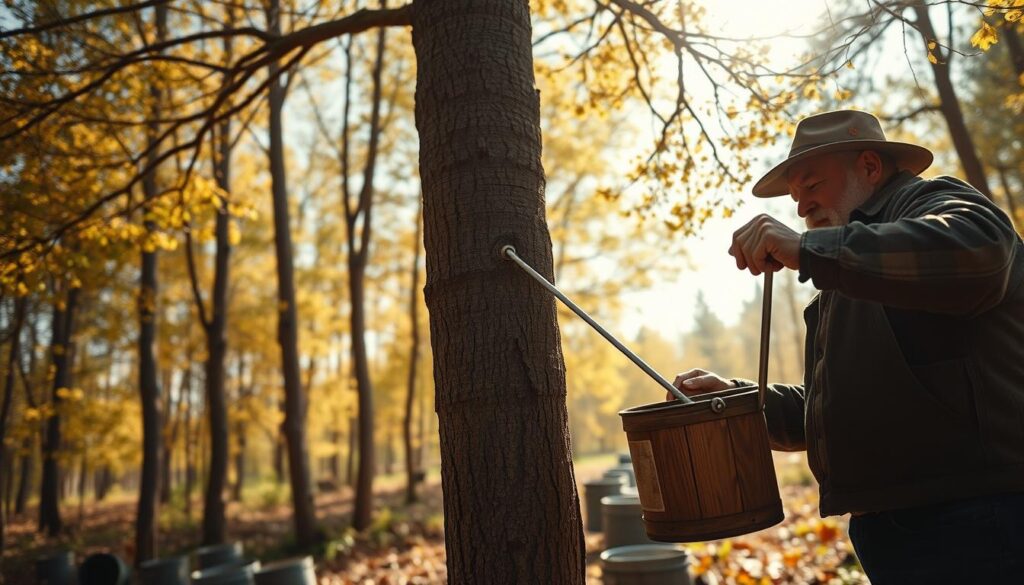
Starting with the right tree and preparation is key. Farmers must look at several important factors. These help get the most sap while keeping the trees safe:
- Select healthy trees with a minimum diameter of 10 inches
- Choose trees with strong, robust bark and no visible damage
- Implement a strategic tap rotation system
- Use clean, sharp tapping equipment
The technical side of tapping maple trees needs careful attention. Where you place the tap is very important for sustainable tapping:
| Tree Diameter | Maximum Taps Allowed | Recommended Tap Height |
|---|---|---|
| 10-15 inches | 1 tap | 4-5 feet from ground |
| 16-20 inches | 2 taps | 3-6 feet from ground |
| 20+ inches | 3 taps | 4-7 feet from ground |
Using the right drilling techniques is part of sustainable farming. Farmers should make clean, angled holes about 1.5 to 2 inches deep. This helps avoid harming the tree. The hole should be angled slightly up to help sap flow better.
Professional sugarmakers see tapping maple trees as more than just a harvest. It’s a commitment to protecting the forest and managing resources wisely.
Sustainable Maple Syrup Farming Methods
Sustainable farming is key in making maple syrup today. Farmers are now more focused on caring for the environment and keeping their syrup organic. This way, they make sure their syrup is of the highest quality.
The maple syrup world has come up with new ways to protect forests. These methods help keep the ecosystem healthy for a long time. They go beyond just tapping trees, adding important steps for the environment.
Environmental Conservation Techniques
There are many important steps in sustainable maple syrup farming:
- Minimizing forest disturbance during tapping
- Protecting wildlife habitats
- Implementing selective tree management
- Reducing carbon footprint through efficient production methods
Forest Management Strategies
Good forest management is essential for healthy maple trees. Farmers use science to help trees grow back and stay productive:
- Regular forest inventories
- Careful tree selection for tapping
- Monitoring forest health and biodiversity
- Implementing rotational tapping systems
Organic Certification Requirements
Organic maple syrup needs to follow strict environmental rules. Getting certified means:
- Prohibiting synthetic chemical use
- Maintaining detailed production records
- Undergoing regular third-party inspections
- Implementing sustainable forest management practices
By using these sustainable farming methods, maple syrup makers protect nature. They also give top-quality organic syrup to those who care about the planet.
Processing and Evaporation Techniques
Maple syrup production turns raw sap into a tasty golden liquid. This process uses a special evaporation method. It’s a journey that has been perfected over many years by sugarmakers.
The first step is collecting raw sap, which has about 2% sugar. Then, producers use big evaporators to make the sap more concentrated. This process removes water, increasing the sugar content to about 66-67%.
- Initial sap collection from maple trees
- Filtering raw sap to remove debris
- Heating sap in specialized evaporation equipment
- Monitoring sugar concentration carefully
Professional sugarmakers pay close attention to temperature during production. Specialized hydrometers and refractometers help check sugar density. This ensures the syrup’s quality and taste stay consistent.
Today’s evaporation methods are much better than before. Wood-fired and oil-powered evaporators are now matched by energy-saving reverse osmosis systems. These advancements make maple syrup production faster without losing its traditional taste.
“The art of maple syrup making is a delicate balance between science and tradition” – Vermont Maple Sugar Makers Association
Every step of evaporation needs careful watching. Sugarmakers must keep an eye on temperature to avoid burning the syrup. This helps keep the syrup’s rich, unique flavor.
Quality Control and Grading Standards
The maple syrup industry focuses on quality control to give consumers the best product. Keeping high standards is key to the reputation of maple syrup. It also meets market expectations.
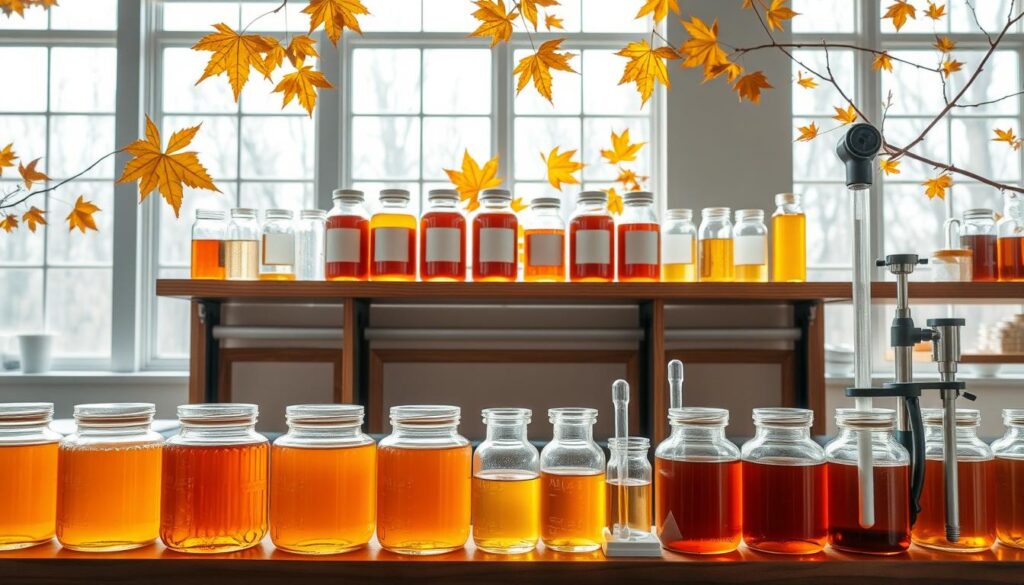
Quality control starts with checking several important factors. These factors decide the syrup’s grade and how well it sells. Sugarmakers must focus on many aspects to make a high-quality syrup.
USDA Grading System Explained
The USDA has a detailed grading system for maple syrup. It sorts products by color and flavor:
- Golden Color, Delicate Taste: Lightest grade, with a subtle maple flavor
- Amber Color, Rich Taste: Slightly darker with more maple taste
- Dark Color, Robust Taste: Deeper color with strong maple flavor
- Very Dark Color, Strong Taste: Most intense flavor
Testing Methods and Equipment
Professional maple syrup makers use special tools for quality checks. Important tools include:
- Refractometers for sugar content
- Color grading kits
- Density meters
- Flavor evaluation tools
These precise tests help ensure the syrup is of high quality. This meets industry standards and pleases consumers.
Marketing Your Maple Syrup Business
To succeed in the maple syrup business, you need a strong marketing plan. It should show off the special care that goes into making maple syrup. Telling the story of your brand is key to connecting with customers.
Here are some important marketing steps for your maple syrup business:
- Develop a unique brand identity
- Make your packaging stand out
- Use digital marketing to reach more people
- Connect with both local and online customers
Knowing the latest trends in the maple syrup market is vital. Today’s buyers want to know the truth about where their food comes from. They also care about how it’s made and if it’s good for the planet.
| Marketing Channel | Effectiveness Rating | Target Audience |
|---|---|---|
| Farmers Markets | High | Local food lovers |
| Online Platforms | Very High | People all over the country |
| Social Media | High | Younger folks |
Digital storytelling can turn maple syrup into a memorable brand experience. By sharing your heritage and how you make syrup, you can touch people’s hearts. This can make them want to buy from you.
“Great marketing turns maple syrup from a commodity into a cherished narrative” – Maple Industry Expert
Top maple syrup businesses know marketing is more than just ads. It’s about building relationships, showing off your syrup’s quality, and understanding what people want. These are the core parts of a winning marketing plan.
Financial Aspects of Maple Syrup Farming
Starting a maple syrup business needs good financial planning and smart investment. It’s important to know the costs, how much money you can make, and the chances to make it profitable. This turns a hobby into a business.
Good maple syrup business owners know that getting ready financially is key. They understand the costs to start and how to make money. They look at different parts of the business to plan well.
Initial Investment Requirements
Starting a maple syrup business costs a lot at first. You need to think about:
- Land to buy or rent for a long time
- Special equipment for making syrup
- Stuff to tap trees and collect sap
- Places to store and process the syrup
Operating Costs and Revenue Projections
To understand the money side of Maple Syrup Farming, you need to look at costs and how much you can make.
| Expense Category | Estimated Annual Cost |
|---|---|
| Equipment Maintenance | $2,500 – $5,000 |
| Labor Costs | $10,000 – $25,000 |
| Energy and Utilities | $1,500 – $3,000 |
| Potential Annual Revenue | $30,000 – $75,000 |
Grant Opportunities and Funding Sources
Maple syrup business owners can find money to help their farm:
- USDA Agricultural Grants
- State programs for agriculture
- Grants for conservation and forestry
- Loans for small businesses in agriculture
Prospective maple syrup farmers should do their homework and talk to local agricultural offices. This helps find the best financial help for their farm.
Regulations and Compliance in the Maple Syrup Industry
The maple syrup industry has many legal rules to follow. Producers need to know about food safety, labeling, and organic standards. These rules are key for making organic maple syrup.
The maple syrup industry follows strict rules to keep products safe and good. There are several important rules producers must follow:
- Food Safety Regulations
- Organic Certification Standards
- State-Specific Licensing Requirements
- Labeling and Packaging Compliance
State health departments watch over maple syrup making. Each state has its own rules for places, cleanliness, and how products are made. Organic maple syrup producers get extra checks, needing to show all their work and go through inspections.
| Regulatory Area | Key Requirements | Compliance Focus |
|---|---|---|
| Food Safety | HACCP Certification | Sanitation Standards |
| Organic Certification | USDA Organic Standards | Annual Inspections |
| Labeling | Nutritional Information | Accurate Product Claims |
Groups like the North American Maple Syrup Council help a lot. They give advice and tools for producers to follow the rules.
Successful maple syrup producers keep up with new rules and keep good records of their work.
Producers need to be ahead of the game with local and federal rules. They should get training, keep up with changes, and keep detailed records. This is key for doing well in the organic maple syrup market.
Expanding Your Maple Product Line
The maple syrup business is full of chances for entrepreneurs to grow. They can turn their traditional syrup into many products that today’s buyers love.
By diversifying, maple syrup makers can tap into new trends and grow their business. They can make special products that draw in more customers and boost profits.
Innovative Value-Added Products
- Maple candy and confections
- Maple cream spreads
- Maple-infused baked goods
- Specialty maple cooking ingredients
- Artisan maple sugar products
Diversification Strategies
More people want artisanal and local products. Producers can meet this demand by making unique products beyond syrup.
- Create collaborative products with local businesses
- Develop non-food maple products like skincare items
- Offer sugarhouse tours and maple festivals
- Design maple-themed merchandise
- Develop online workshops and educational experiences
Successful maple syrup businesses know that being innovative is key. By trying new products and understanding the market, they can turn their old ways into new, exciting businesses.
Challenges and Solutions in Maple Syrup Production
Maple syrup farming faces big challenges that test the strength of sugarmakers. The biggest problem is unpredictable weather. It affects sap flow and how much syrup can be made.
Sugarmakers deal with many tough issues in their work:
- Extreme temperature changes that mess with sap collection
- Keeping pests out of maple forests
- Keeping equipment running and using new tech
- Dealing with ups and downs in the market
Climate change makes maple syrup farming even harder. Winters are shorter, and weather patterns are less stable. This messes up the usual time for collecting sap. Successful producers use new tech and flexible ways to collect sap.
“Resilience in maple syrup production means embracing innovation while respecting traditional techniques.” – Maple Syrup Research Institute
New tech is helping sugarmakers. Things like precise tapping tools, remote sap flow sensors, and better forest care help them make syrup even when the weather is bad.
To tackle market problems, sugarmakers are getting creative. They’re making different products, selling directly to customers, and getting organic certifications. This helps them stand out in a crowded market.
Conclusion
Maple syrup production is a mix of old traditions and new ideas. It needs passion, knowledge, and a commitment to being green. Producers turn natural sap into a top-notch product through hard work and skill.
This work is more than just farming. It links people to their past and opens doors for making money. Keeping forests healthy and checking quality are key to a maple syrup business’s success. Today’s farmers use old ways and new tech to make more syrup.
Starting a maple syrup farm is like combining art and science. The field invites creativity with new products, direct sales, and extra services. By knowing the weather, using the right tools, and keeping quality high, entrepreneurs can grow successful businesses. These businesses help local economies and protect forests.
With more people wanting natural, local foods, maple syrup farming is a great chance for farmers. This ancient craft keeps inspiring new producers in maple-rich areas of North America.