
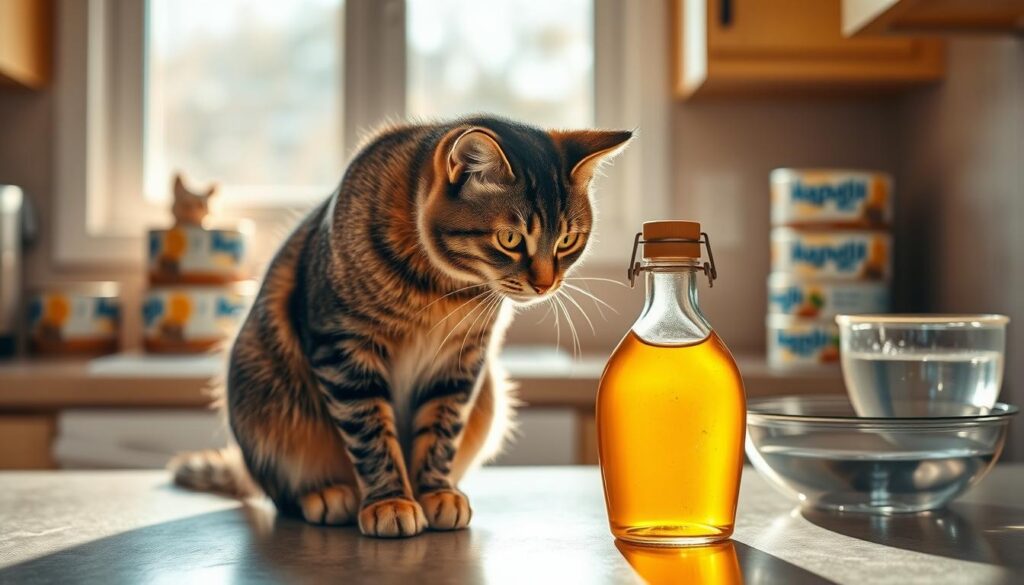

Every cat owner wants their pet to stay healthy and safe. Questions about human foods like maple syrup often come up. It’s important to know what’s safe for cats to eat to avoid health problems.
Cats need a special diet that’s different from humans. The question “can cats have maple syrup” is more complex than it seems. Their bodies can’t handle some human foods, like those with a lot of sugar.
Your cat’s diet is very specific and delicate. Maple syrup might seem okay, but it could harm their health. Pet food safety is about more than just avoiding bad foods. It’s about giving your cat the right nutrients for their health.
Vets say it’s key to feed cats the right food. Cats are meant to eat meat, not sugary foods like maple syrup. Eating foods high in sugar can upset their diet and cause health issues.
This guide will dive into the world of cats and maple syrup. You’ll learn about cat nutrition, health risks, and why some human foods aren’t good for pets. By the end, you’ll know how to make the best choices for your cat’s diet.
Understanding Cats and Sweet Foods: A Basic Overview
Cats have a special way of eating that’s different from other animals. They are obligate carnivores, meaning their diet is based on meat. This is because of their evolution, which shaped their taste and eating habits.
A cat nutrition guide shows how cats see taste and nutrition in a unique way. Unlike humans, their senses are different, including how they taste sweetness.
Why Cats Can’t Taste Sweetness
Research has found that cats can’t taste sweet things. This is because of a genetic change that makes their sweet taste receptors not work.
- Cats have fewer taste buds than humans
- Their taste receptors are mainly for protein-rich foods
- They can’t sense sweetness at all
Natural Feline Diet Preferences
In the wild, cats mainly eat small animals. Their diet is high in protein, which is key for their survival.
The Evolution of Feline Taste Buds
Over time, cats’ taste has evolved to help them survive. Their taste buds are designed to find amino acids and protein. This helps them find the best food in their environment.
Nature has made cats to be precise hunters with special dietary needs. These needs are very different from what humans need.
Can Cats Have Maple Syrup: The Direct Answer
Pet owners often wonder if human foods are safe for their cats. Maple syrup is a topic of debate. Is maple syrup safe for cats? The answer is yes, but it’s not recommended.
Cats need a diet that’s different from humans. They can have maple syrup without immediate harm. But it’s not good for them. The sugar in maple syrup can cause health problems like weight gain and dental issues.
- Unnecessary calorie intake
- Potential digestive problems
- Risk of weight gain
- Possible dental issues
Vets say no to maple syrup and sugary foods for cats. Cats are meant to eat meat, not sugar. Their bodies can’t handle sugar well.
If your cat eats a little maple syrup, don’t worry too much. But eating it often can be bad. The best thing is to feed your cat a diet made just for them.
The Composition of Maple Syrup and Its Effects on Cats
Maple syrup’s complex makeup offers key insights into its possible harm to cats. Cats are very sensitive to sugars because of their unique metabolism.
Maple syrup’s complex structure can be tough for cats’ digestive systems. Knowing these risks is key for pet owners who might consider giving cats maple syrup.
Natural vs. Artificial Maple Syrup Breakdown
Maple syrup is mainly divided into two types, each with its own effects:
- Natural Maple Syrup: Pure sap with little processing
- Artificial Maple Syrup: Made with added chemicals
Sugar Content Analysis
The sugar in maple syrup is a big health risk for cats. Their bodies can’t handle high sugar levels well. This can cause:
- Fast weight gain
- Potential insulin resistance
- Digestive problems
Chemical Component Evaluation
Maple syrup also has trace minerals and compounds. These can harm a cat’s metabolism. They might affect how cats absorb nutrients and cause health issues.
Vets advise against giving maple syrup to cats. They stress the need for food that’s right for cats.
Potential Health Risks of Feeding Maple Syrup to Cats
Feeding maple syrup to cats can be risky. It might seem like a sweet treat, but it can cause serious health problems. Maple syrup toxicity in cats can lead to serious issues.
The main health risks include:
- Obesity risks: High sugar content can lead to unhealthy weight gain
- Potential insulin resistance and diabetes development
- Dental health deterioration
- Digestive system disruption
Cats can’t digest a lot of sugar well. This can cause long-term health problems. It can affect their metabolism and overall health.
“Cats are obligate carnivores and cannot metabolize sugars like humans do,” warns veterinary nutritionist Dr. Sarah Thompson.
The sugar in maple syrup can cause blood sugar spikes. This can be hard on a cat’s body. It may lead to:
- Increased thirst
- Frequent urination
- Potential pancreatic stress
- Potential development of feline diabetes
Pet owners should focus on the right diet for their cats. Avoiding unnecessary sugars is best.
Signs of Maple Syrup Intolerance in Cats
Keeping your pet safe from harmful foods is key. Maple syrup can be toxic to cats and show signs that pet owners need to spot fast.
Cats digest food differently than humans. Maple syrup can cause specific symptoms in cats, showing they might not be okay.
Digestive System Reactions
Cats eating maple syrup might show these signs of digestive trouble:
- Persistent vomiting
- Diarrhea with unusual consistency
- Abdominal pain or bloating
- Reduced appetite
Behavioral Changes to Watch For
Maple syrup can also change a cat’s behavior:
- Increased lethargy
- Unusual hiding behavior
- Decreased social interaction
- Visible discomfort when moving
When to Contact Your Veterinarian
If you see these signs, call your vet right away:
- Prolonged vomiting lasting more than 24 hours
- Significant changes in water consumption
- Continuous lethargy
- Blood in stool or vomit
Quick professional help can stop serious problems from maple syrup.
The Impact of Sugar on Feline Health

Sugar is a big problem in cat nutrition. Cats and humans have very different ways of handling sugar. Cats can’t process sugar well, which is why they need special diets.
Cats are meat-eaters by nature. Their bodies are made to digest proteins, not carbs. This makes it hard for them to handle sugar.
- Sugar can trigger rapid weight gain in cats
- Excessive sugar intake increases diabetes risk
- Dental health deteriorates with sugar consumption
- Metabolic disorders become more likely
Sugar can harm cats a lot. Studies show it can cause serious health issues.
| Health Concern | Potential Impact | Severity |
|---|---|---|
| Obesity | Weight gain, reduced mobility | High |
| Diabetes | Insulin resistance, metabolic dysfunction | Critical |
| Dental Problems | Tooth decay, gum disease | Moderate |
Veterinarians strongly recommend avoiding sugar in cat diets. Cats need a diet rich in protein and low in carbs to stay healthy.
Safe Alternatives to Maple Syrup for Cats
Cat owners looking for safe sweeteners have many options. These alternatives should be chosen with care. They must be safe and tasty for your cat without harming their health.
Vets suggest protein-based treats that match a cat’s natural diet. This approach ensures your cat gets the nutrients they need. It also considers their unique digestive system.
Natural Cat Treats Recommended by Experts
- Cooked chicken pieces
- Small portions of fish
- Freeze-dried meat treats
- Commercial cat treats with high protein content
Vet-Approved Treat Options
| Treat Type | Nutritional Benefits | Serving Size |
|---|---|---|
| Lean Meat Strips | High protein, low fat | 1-2 small pieces |
| Bonito Flakes | Rich in omega-3 fatty acids | Pinch per serving |
| Commercial Dental Treats | Supports oral health | 2-3 treats daily |
Remember that moderation is key when introducing any new treats to your cat’s diet. Always consult with your veterinarian before making significant changes to your cat’s nutritional routine.
Emergency Response: What to Do If Your Cat Consumes Maple Syrup
Pet food safety is key when accidents happen, like a cat eating maple syrup. Quick action can stop health problems from maple syrup risks.
- Check how much maple syrup they ate
- Watch for odd symptoms
- Call your vet right away
Look out for signs of maple syrup health issues:
- Too much thirst
- Sudden tiredness
- Stomach upset
- Changes in how they pee
“Quick action and vet advice are key for diet mishaps,” says Dr. Sarah Richardson, a vet nutrition expert.
Your vet might do tests to check for sugar problems. They might check blood sugar and do a full health check.
| Symptom | Immediate Action | Veterinary Intervention |
|---|---|---|
| Mild Digestive Upset | Watch their water intake | Phone call for advice |
| Significant Distress | Don’t give them food | Go to the vet now |
| Prolonged Symptoms | Keep symptom notes | Full health check |
Prevention is the best way to keep pets safe. Always keep sweet things away from your cat.
Understanding Feline Dietary Requirements
To create a good cat nutrition guide, we must know what cats need to eat. Cats are obligate carnivores, meaning they need meat to be healthy. Unlike us or other pets, cats have special dietary needs.
Here are the main parts of a healthy cat diet:
- High-quality animal protein
- Essential amino acids
- Specific vitamins and minerals
- Moderate fat content
- Minimal carbohydrates
Protein is very important for cats. They need animal proteins that have all the amino acids they need. Cats can’t digest plant proteins well, so meat is key. Taurine, found in animal tissues, is also very important for them.
“Cats are not small dogs, and their nutritional needs are dramatically different.” – Veterinary Nutrition Experts
When making a cat nutrition guide, there are important things to remember. Cats need certain nutrients that help their metabolism. They also need vitamins A and D, which they can’t make themselves. Water is important too, as cats don’t drink much and get most of their water from their food.
Knowing what cats need helps us feed them right. Talking to a vet can give us advice that fits our cat’s age, weight, and health.
Common Misconceptions About Cats and Sweet Foods
Cat nutrition is complex, and many pet owners believe myths about what cats eat. It’s important to know the truth about cat nutrition and pet food safety to keep your cat healthy.
Many myths surround cats and sweet foods. These myths come from not understanding cats’ biology and nutritional needs.
Popular Myths Debunked
- Myth: Cats can enjoy human sweet treats
- Myth: Sugar is a harmless occasional treat for cats
- Myth: Cats have similar taste preferences to humans
These beliefs can harm your cat’s health. Cats have unique dietary needs that are different from humans. Their bodies can’t process sugars like ours do.
Scientific Evidence
Studies in veterinary nutrition show cats lack taste receptors for sweetness. This means they don’t taste sweetness like humans do.
| Myth | Scientific Explanation |
|---|---|
| Cats enjoy sweet foods | Cats have no evolutionary need for sweet taste receptors |
| Sugar is safe for cats | Excess sugar can lead to obesity and diabetes |
| Cats can digest sugar like humans | Feline metabolism differs significantly from human metabolism |
A good cat nutrition guide stresses the need for diets that fit their species. Understanding your cat’s unique needs and avoiding human foods is key to pet food safety.
Proper Cat Nutrition Guidelines
Creating a good cat nutrition guide means knowing what cats need to eat. Cats are meat-eaters and need certain nutrients that other pets don’t. A balanced diet is key to keeping them healthy and avoiding nutritional problems.
A healthy cat diet starts with high-quality proteins. Cats need specific nutrients that can only come from a balanced diet. Their dietary needs are strict, so meal planning must be precise.
- Protein should make up 35-45% of their diet
- Fat should be around 15-20%
- They don’t need much carbohydrate
Each stage of a cat’s life has different nutritional needs. Kittens, adult cats, and seniors all need different diets. Pet owners must think about these needs carefully.
| Life Stage | Protein Needs | Caloric Requirements |
|---|---|---|
| Kittens | High (45-50%) | Higher metabolism |
| Adult Cats | Moderate (35-40%) | Maintenance level |
| Senior Cats | Adjusted (30-35%) | Reduced caloric intake |
Commercial cat foods usually have the right mix of nutrients. But, it’s always best to talk to a vet to make sure your cat is getting what they need. Every cat is different, and their nutritional needs can vary based on their health, breed, and how active they are.
Proper nutrition is the cornerstone of feline health and longevity.
Watching your cat’s weight, energy, and health is important for good nutrition. Regular vet visits can help make sure your cat’s diet is right for them.
Expert Veterinary Opinions on Maple Syrup Consumption
Veterinary experts all agree: maple syrup is not good for cats. Dr. Sarah Klein, a top vet nutritionist, says it’s key for pet owners to know if maple syrup is safe for cats.
“Cats are obligate carnivores with unique dietary needs. Adding sugary things like maple syrup can be very harmful,” says Dr. Michael Rodriguez, a leading expert on cat nutrition.
Experts talk about several big worries with cats and maple syrup:
- Cats can’t break down high sugar like maple syrup
- Maple syrup doesn’t give cats any good nutrients
- Sugar can cause stomach problems in cats
The vets say no to sugary treats for. Cats’ stomachs aren’t made for these foods.
| Veterinary Perspective | Recommendation |
|---|---|
| Nutritional Value | Zero benefit for cats |
| Digestive Impact | High risk of gastrointestinal issues |
| Long-term Health | Potential obesity and metabolic problems |
Experts always suggest a meat-only diet for cats to stay healthy.
Conclusion
When we look into pet food safety, the question “can cats have maple syrup” is very important. Maple syrup is not toxic to cats, but it has no nutritional value. It could even cause health problems.
Vets always say to feed cats what they need, not what humans like. Cats need a lot of protein to stay healthy. Adding maple syrup to their food can upset their balance and cause health issues.
It’s up to pet owners to make smart choices about their cat’s food. Talking to vets, learning about what cats need, and picking safe treats is key. This keeps cats healthy and happy.
The main point is clear: cats do best on food made just for them. Avoiding sugary foods keeps them healthy in the long run. It also matches their natural eating habits.


