
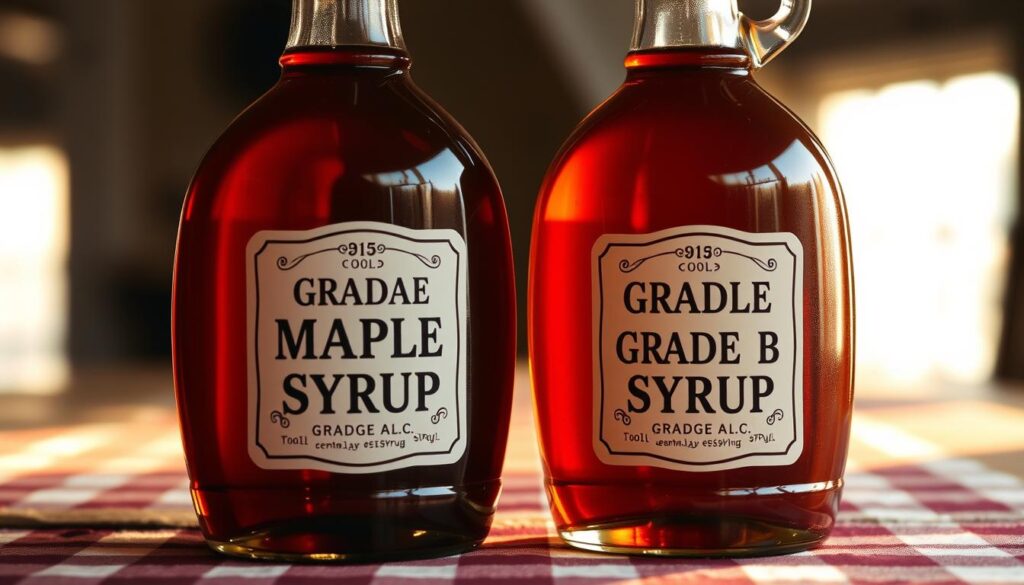

Understanding the difference between grade A and grade B maple syrup is key. Maple syrup comes from North American maple trees and is loved for its rich taste. It’s made by boiling down the sap of sugar maple trees.
The syrup’s grade shows its quality and how it’s best used in cooking. This knowledge helps you pick the right syrup for your dishes.
Grade A syrup is lighter in color and taste, perfect for pancakes or waffles. Grade B syrup is darker and stronger, great for baking or cooking. It adds a deep maple flavor to your food.
Knowing about maple syrup quality helps you choose the best for your recipes. This article explores the grades, their characteristics, and how they enhance different dishes. It aims to help you pick the right syrup for your taste and cooking needs.
Understanding Maple Syrup Grades
The world of maple syrup is rich and diverse. It’s mainly defined by the maple syrup grading system. Different grades show variations in color, flavor, and sweetness. This can greatly affect what people like.
Traditionally, there are two main categories: Grade A and Grade B. Grade A syrup is lighter in color and has a more delicate flavor. It’s great for pancakes and waffles. On the other hand, Grade B syrup is darker and has a stronger taste. It’s perfect for baking and cooking.
Some people might get confused about these grades. They might think Grade A is always better. But, it really depends on what you like and how you use it. Learning about the maple syrup grading system helps you enjoy different flavors.
The Maple Syrup Grading System
The USDA maple syrup standards have a clear grading system for pure maple syrup. This is important for both buyers and makers. The system sorts syrup by color, flavor, and density. Knowing these helps buyers choose the right syrup for themselves or their business.
Maple syrup is mainly split into two groups: Grade A and Grade B. Each group has more specific types based on how it looks and tastes. The USDA’s system makes it easy for people to know they’re getting quality syrup.
Color is a key factor in grading. Lighter syrups, like Grade A, have a light taste. Darker syrups, like Grade B, have a stronger taste. This helps buyers pick the right syrup for their needs.
Following USDA standards helps producers keep their syrup top-notch. It also keeps the traditional ways of making syrup alive. This system lets consumers enjoy real maple syrup, not fake stuff.
Grade A vs Grade B Maple Syrup: What’s the Difference?
Understanding the difference between grade A and grade B maple syrup is key. Grade A syrups are lighter in color and sweeter. They’re perfect for topping pancakes or waffles. Their mild flavor makes them great for the table.
Grade B maple syrup, on the other hand, is darker and has a stronger taste. It’s best for cooking and baking. Chefs love it for adding a deep maple flavor to dishes. It’s also great for recipes that need a syrup with a bold taste.
Both grades have their own place in cooking. The choice between them depends on what you like and how you plan to use it. Each offers unique qualities for different tastes and uses.
| Feature | Grade A | Grade B |
|---|---|---|
| Color | Lighter | Darker |
| Taste | Sweeter, milder | Bolder, more intense |
| Best Suited For | Table use | Culinary applications |
| Common Uses | Pancakes, waffles | Baking, sauces |
Color and Flavor Profiles of Maple Syrup
Knowing how maple syrup color and flavor relate is key for everyone. The grades of maple syrup depend on this connection. As syrup is made, its color gets darker and its taste changes. This leads to different flavors for various uses in cooking.
How Color Influences Taste
Lighter maple syrups have a milder taste, often seen as subtle and gentle. When the syrup gets darker, its taste gets stronger, with richer, caramel-like flavors. Chefs pick syrups based on these flavors to match their dishes perfectly.
Different Flavor Notes Across Grades
Every maple syrup grade has its own unique taste. For example:
- Grade A Light Amber: Sweet and buttery with hints of vanilla.
- Grade A Medium Amber: Balanced flavor with a touch of caramel.
- Grade A Dark Amber: Rich, robust taste with bold maple undertones.
- Grade B: Strong maple flavor with pronounced caramel and molasses notes.
This variety shows the difference in maple syrup grades. It makes cooking more flexible. Knowing these flavors helps pick the perfect syrup for any dish.
USDA Maple Syrup Standards Explained
The USDA maple syrup standards are key to keeping the quality high in the maple syrup world. They make sure the syrup tastes right, looks right, and is of good quality. Knowing these standards helps people choose the best syrup for them.
Maple syrup is sorted by how strong it tastes and how dark it is. This helps both makers and buyers know what to expect. It makes it easier to pick the syrup that fits your taste and needs.
| Grade | Color | Flavor Profile | Usage |
|---|---|---|---|
| Grade A Light | Light Golden | Delicate, Mild | Table Use, Desserts |
| Grade A Medium | Golden | Rich, Medium | Pancakes, Waffles |
| Grade A Dark | Amber | Strong, Robust | Baking, Cooking |
| Grade B | Dark Brown | Very Strong, Bold | Cooking, Flavoring |
The USDA maple syrup standards are very important. They help sugarmakers make syrup that meets high quality standards. By learning about these standards, consumers can better understand why some syrups are better than others.
Vermont Maple Syrup Grades
Vermont maple syrup grades stand out for their quality and flavor. This system is known for its unique taste and color. It comes from traditional sugarmaking methods used by local producers.
The grading in Vermont is closely linked to the region’s climate and soil. This affects the syrup’s flavor. Vermont’s high elevation and varied terrain make the sap exceptional, leading to a variety of tastes.
Dark syrups from Vermont are known for their intense flavor. Grade A Dark Color syrup, in particular, has a robust taste. It’s perfect for those who love a strong maple flavor. This syrup is made from sap collected later in the season, when it’s most concentrated and flavorful.
Making quality syrup involves several steps, from collecting raw sap to the final syrup. Raw sap has about 2-3% sugar, which increases to 10-12% during boiling. The final syrup has 66-67% sugar, creating the unique flavors Vermont syrups are famous for.
Vermont also values organic practices and sustainability. Many producers avoid synthetic pesticides, focusing on natural forest ecosystems. This not only improves syrup quality but also promotes eco-friendly practices. For more on dark syrup, check out this article.
Uses for Grade A and Grade B Maple Syrup
Grade A and Grade B maple syrups have their own special places in cooking and baking. Each type brings its own flavor to the table, making dishes richer and more interesting. Knowing when to use each grade can help you enjoy maple syrup even more.
Culinary Applications of Grade A Syrup
Grade A maple syrup is loved for its sweet, gentle taste. It’s perfect for topping pancakes, waffles, and French toast. Its light color also makes it great for desserts where a touch of sweetness is just right.
- Drizzling over fresh fruit
- Incorporating into salad dressings
- Sweetening smoothies and yogurt
- Using as a natural sweetener in baking
When to Choose Grade B Syrup for Recipes
Grade B maple syrup has a stronger flavor, making it ideal for recipes needing a bold maple taste. It’s perfect for baking, marinades, and sauces. It adds a depth of flavor that Grade A syrup can’t match.
- Adding to barbecue sauces
- Enhancing the flavor of baked goods like cookies and brownies
- As a glaze for roasted meats
- In rich desserts like cakes and custards
| Type of Syrup | Color | Flavor Profile | Best Uses |
|---|---|---|---|
| Grade A | Light amber to medium | Sweeter, milder | Pancakes, waffles, desserts |
| Grade B | Dark amber | Rich, bold | Baking, marinades, sauces |
Which Maple Syrup Grade is Better?
Choosing maple syrup depends on what you like. Some prefer Grade A for its light taste, great for breakfast foods. Others like Grade B for its strong flavor, perfect for desserts. It’s all about what you enjoy and how you use it.
Consumer Preferences in Syrup Selection
Grade A syrup is popular for its light taste, perfect for pancakes and waffles. Grade B syrup is loved for its bold taste, great with desserts. Your taste and cooking needs decide which one you prefer. Try both to see which you like best.
Nutritional Aspects of Different Grades
Both Grade A and Grade B syrups are good for you. They have minerals like manganese, zinc, and potassium. Here’s a comparison of their nutritional values:
| Nutritional Element | Grade A Syrup (per 100g) | Grade B Syrup (per 100g) |
|---|---|---|
| Sugar Content | 67g | 70g |
| Calories | 260 | 290 |
| Manganese | 0.33 mg | 0.31 mg |
| Zinc | 0.16 mg | 0.14 mg |
This table shows the nutritional differences between the two grades. Both are healthy, but there are slight variations. For more info, check out nutritional aspects of different grades. Your choice should also consider taste and use.

Dark vs Amber Maple Syrup: A Deeper Look
The world of maple syrup is rich and diverse. This is true when we look at dark vs amber maple syrup. Each type has its own flavor and uses in cooking.
Dark maple syrup has a deeper color and a stronger taste. It tastes like caramel and has a woody flavor. This makes it great for cooking, baking, and adding to marinades and glazes.
Amber maple syrup, on the other hand, is lighter in color and sweeter. It’s perfect for breakfast foods like pancakes and waffles. Its sweet flavor doesn’t overpower dishes, making it versatile in recipes.
The way syrup is made affects its color and taste. As sap boils, it gets darker and tastes stronger. This change is not just about looks; it changes how we use dark vs amber syrup in cooking.
For more on syrup grades, check out this link. It offers detailed information on syrup grading.
Knowing the differences between dark and amber syrups can improve your cooking. Some like the bold taste of dark syrup, while others prefer the sweetness of amber. Learn more about these syrups at this source.
Organic Maple Syrup Classification
The way organic maple syrup is classified is strict. It makes sure the syrup is made in a way that’s good for the environment. This means the syrup comes from trees that are healthy and the production process is sustainable.
One key thing about organic maple syrup is that it doesn’t have synthetic chemicals. The people making it have to keep an eye on the forest’s health. They also use methods that don’t harm the environment. This makes the syrup better and keeps the forest healthy.
Getting organic certification is big for both the makers and the buyers of syrup. It helps the makers reach more people who care about their health. And for the buyers, it means they’re getting syrup that’s made with care for the planet. Knowing about market trends helps them make better choices.
Organic maple syrup also has different tastes, depending on when the sap is collected and how it’s processed. The rules for organic syrup mean that buyers get a top-notch product. It shows that they support farming that’s good for the earth.
How to Choose the Right Maple Syrup for Your Needs
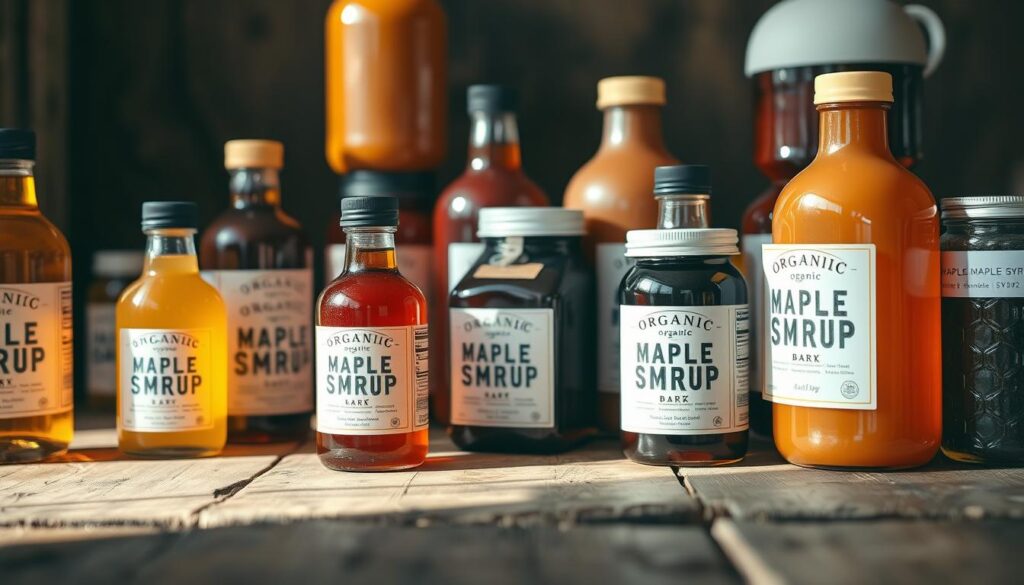
Choosing the right maple syrup starts with knowing what you like and how you plan to use it. Think about the flavors and qualities you prefer. Different syrups have different sweetness levels, colors, and tastes. Each is best for different dishes.
For instance, Grade A Light syrup is great for pancakes and waffles because it’s light and sweet. On the other hand, Grade B syrup has a strong, earthy taste. It’s perfect for baking or desserts. Here are some tips to help you choose:
- Match flavors: Use lighter syrups for breakfast foods and darker syrups for savory dishes.
- Experiment: Try different grades in recipes to find new favorites.
- Know the uses: Grade A is good for everyday use, while Grade B is better for cooking and glazing.
Maple syrup is very versatile, so picking the right one is key to enjoying it more. By trying different combinations, you can make your meals better and create special moments with every pour.
Popular Maple Syrup Brands and Their Grades
Exploring maple syrup reveals a wide range of products from different makers. Vermont Maple Syrup Company and Crown Maple are known for their great flavors and quality. They also focus on being sustainable.
Vermont Maple Syrup Company mainly offers Grade A syrup. It has sweet and delicate tastes that are great for breakfast foods. They also care about the environment, making their syrup both tasty and eco-friendly.
Crown Maple is famous for its high-quality syrup. They use sap from old sugar maple trees. They make both Grade A and Grade B syrups. Grade A is lighter and good for everyday use. Grade B has a stronger taste, perfect for cooking.
Every brand follows the same maple syrup grades. This helps people choose based on taste, color, and how they plan to use it. By trying different brands and grades, fans learn about a tradition that values craftsmanship and nature.

Storing Maple Syrup for Best Quality
Keeping maple syrup fresh is key. To do this, store it in a cool, dark place. The fridge is best for keeping it fresh, which is important for opened bottles.
It’s important to keep syrup clean. Use clean tools to avoid contamination. Also, check the bottle for damage before buying. Damaged bottles can spoil the syrup.
Opened syrup can last up to a year in the fridge. Unopened bottles can last three years if stored right.
By following these tips, you can enjoy your maple syrup for a long time. It will stay sweet and flavorful.
Conclusion
Understanding the difference between grade A and grade B maple syrup is key. It matters for both cooking lovers and everyday shoppers. This article has shown how each grade has its own color and taste.
This knowledge helps people choose the right syrup for their needs. Whether you prefer a light flavor or something stronger, there’s a syrup for you. This shows how maple syrup can fit into many recipes.
Choosing between grade A and grade B syrup depends on what you like and how you cook. Exploring these options can make you appreciate the skill that goes into making maple syrup. It makes enjoying this natural product even more special.


