
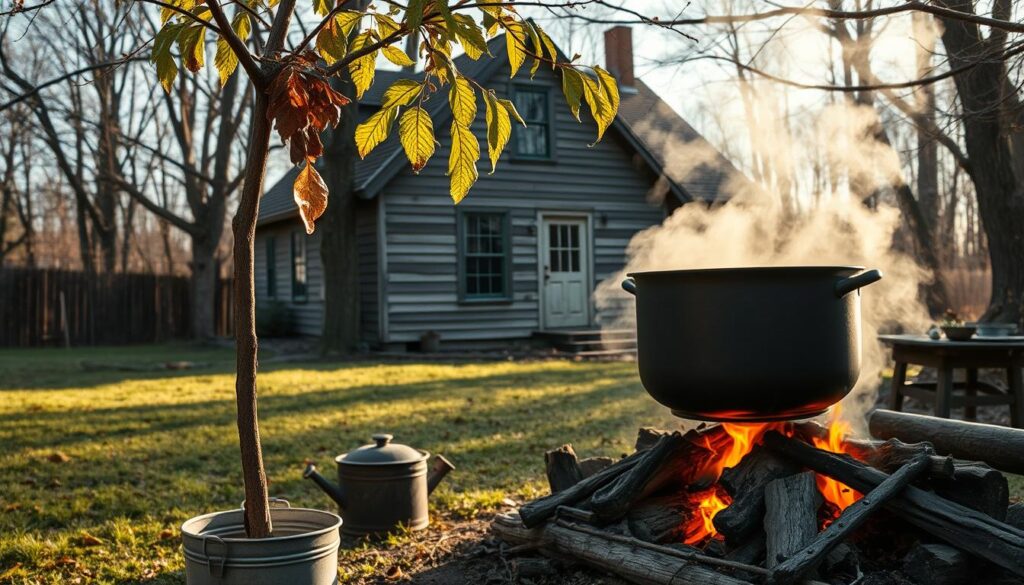

Making homemade maple syrup turns a simple backyard task into a fun cooking adventure. It connects you to nature’s sweetest gift. You turn maple tree sap into a rich, golden syrup that’s better than store-bought.
The art of making maple syrup is rooted in North American culture, like in Vermont and Quebec. Native American tribes first found the sweet maple trees. They taught early settlers how to tap them. Today, sugarmakers keep this tradition alive, tapping trees at the right time.
Creating homemade maple syrup takes patience and a love for learning. You’ll need special equipment, the right maple trees, and to know when sap flows. It might seem hard, but with the right help, anyone can do it. Each step connects you to farming traditions.
The best part is the taste of your homemade syrup. It’s a sign of sustainable food and pure sweetness from your area. Homemade syrup tastes better than store-bought, making it a special treat.
This guide will show you how to make maple syrup. It’s for both beginners and those who want to learn more. Get ready for a tasty journey that celebrates nature’s gifts.
Understanding the Basics of Maple Syrup Production
Backyard maple sugaring turns tree sap into tasty syrup. If you want to tap maple trees at home, knowing the science behind syrup making is key.
Maple syrup starts with maple trees’ special biology. These trees store starch in their roots and trunks during winter. This starch turns to sugar that moves up the sap in spring’s temperature changes.
The Science Behind Sap Flow
Sap flow needs specific temperature patterns. Trees need freezing nights and warm days to move sap well. This happens when:
- Nighttime temperatures drop below freezing (32°F)
- Daytime temperatures rise above 40°F
- Pressure changes within the tree’s internal structure
Types of Maple Trees Suitable for Tapping
Not all maple trees are good for syrup. Choosing the right maple tree is important for backyard sugaring.
- Sugar Maple: Highest sugar content, most preferred
- Red Maple: Good alternative with moderate sugar levels
- Black Maple: Similar characteristics to sugar maple
Optimal Weather Conditions for Sap Collection
To tap maple trees well, you need to know your local climate. The best time for sap collection is usually 4-6 weeks. This is when the temperature changes just right for sap production.
The magic of maple syrup production lies in nature’s delicate temperature dance.
Essential Equipment for DIY Maple Syrup Making
Making homemade maple syrup needs the right tools. You start by getting the necessary equipment for a good harvest and boiling process.
- Tapping Tools
- Cordless drill
- Drill bits (7/16 inch)
- Tapping spiles
- Collection Systems
- Food-grade collection buckets
- Bucket lids
- Plastic tubing
- Boiling Equipment
- Large flat pan
- Stainless steel evaporator
- Thermometer
- Hydrometer
Choosing good equipment is key for making small batch maple syrup. Use professional-grade stainless steel tools. They help keep the sap clean and safe.
Don’t forget about filtering materials for pure syrup. You’ll need:
- Wool filters
- Cheesecloth
- Fine mesh strainers
If you’re on a budget, start with basic tools and add more as you get better. Always choose food-grade materials and keep your equipment in good shape. This way, you’ll make delicious maple syrup every year.
Identifying and Selecting the Right Maple Trees
Starting a backyard maple sugaring project begins with picking the right maple trees. Not all trees are good for tapping maple trees at home. Knowing what to look for can greatly improve your syrup making.
Your maple syrup success depends on picking healthy, mature trees. These trees must support sap collection well. Choosing the right trees involves looking at several important factors.
Tree Age and Size Requirements
Maple trees must be mature before tapping. Here are the key guidelines:
- Minimum tree age: 40 years old
- Minimum trunk diameter: 10-12 inches
- Trees should be healthy and vigorous
Best Tree Species for Syrup Production
Many maple species can be tapped, but some are better than others. Sugar maples are the top choice for backyard maple sugaring.
- Sugar Maple (Acer saccharum): Highest sugar content
- Red Maple: Good alternative with slightly lower sugar concentration
- Black Maple: Similar characteristics to sugar maple
Evaluating Tree Health
It’s important to pick healthy trees for maple syrup. Look for these signs of health:
- Robust, intact bark without significant damage
- Full, healthy canopy during growing season
- No visible signs of disease or pest infestation
- Strong root system with no obvious stress indicators
Choosing the right trees is key to a successful maple syrup project. By picking the best trees and knowing their needs, you’ll have a great experience tapping maple trees at home.
When to Start Tapping Maple Trees
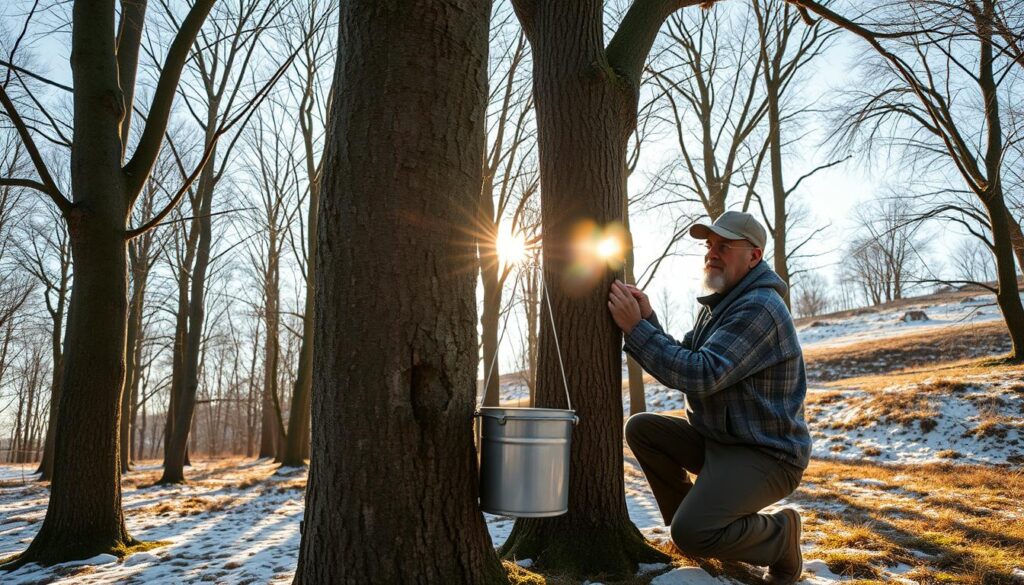
Tapping maple trees at home needs the right timing and knowing when the seasons change. The best time for backyard maple sugaring depends on the weather. Sugarmakers wait for a special temperature mix. This happens when it’s warm during the day but cold at night.
The maple sugaring season usually lasts 4-6 weeks, from late February to early April. But, this time can change based on where you live and the weather each year. To succeed in backyard maple sugaring, you must know these important signs from nature.
- Northeast regions: Mid-February to early April
- Midwest regions: Late February to mid-March
- Northern regions: March to early April
Watching the weather is key for tapping maple trees at home. The best time is when the sap flows well. Consistent freeze-thaw cycles make the sap flow best. If you’re new to sugaring, keep an eye on the weather forecast. Start tapping when the conditions are just right.
Experts suggest checking with local agricultural offices or maple syrup groups for advice. They offer specific tips for your area. This helps you know the best time to tap in your local climate.
Step-by-Step Guide to Tapping Maple Trees
Tapping maple trees at home is a fun DIY adventure. It connects you with nature’s sweet treats. The process needs careful prep and precise steps for successful sap and syrup making.
Understanding the tapping process is key. Sugarmakers know every step is important for getting delicious sap.
Proper Drilling Techniques
Drilling into maple trees needs precision and care. Here’s what to do:
- Choose a clean, healthy maple tree at least 10 inches in diameter
- Use a sharp drill bit between 7/16 and 5/16 inches
- Drill at a slightly upward angle, about 2-3 inches deep
- Make sure the hole is clean and free from debris
Installing Spiles and Collection Systems
The right way to collect sap is key to success. Different methods have their benefits:
| Collection Method | Pros | Cons |
|---|---|---|
| Traditional Bucket | Simple, Low-Cost | Limited Capacity |
| Tubing System | Efficient, Large-Scale | Higher Initial Investment |
Managing Multiple Taps
For those serious about maple syrup, managing taps is important. Here’s how:
- Space taps at least 2 feet apart on the same tree
- Limit taps based on tree diameter
- Rotate tap locations each season
- Clean and sanitize equipment between uses
“The secret to great maple syrup is patience and attention to detail.” – Traditional Sugarmaker
Careful management keeps trees healthy and ensures sap for years.
Collecting and Storing Raw Maple Sap
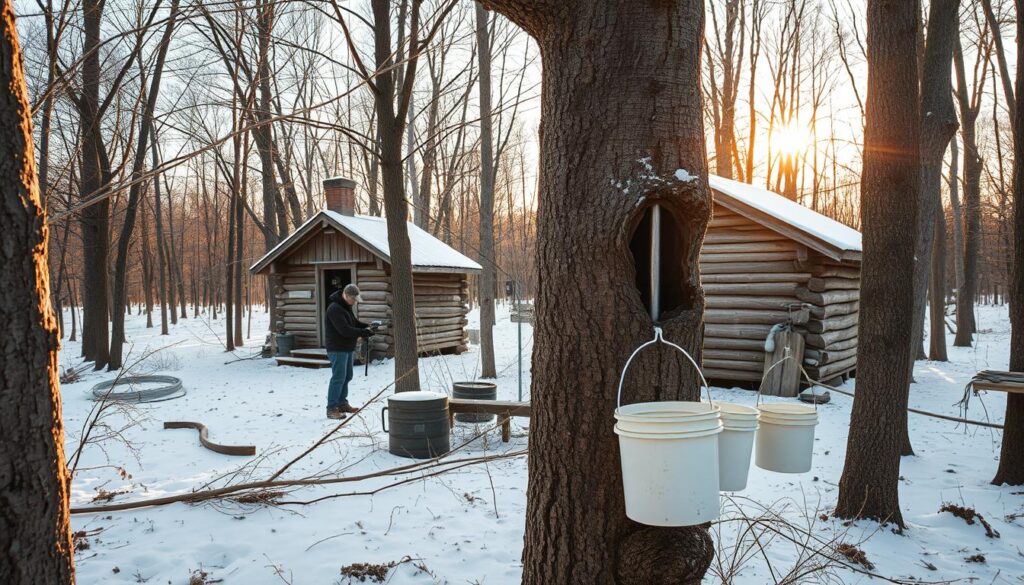
Pure maple syrup making starts with careful sap collection and storage. It needs precision and quick action to keep the sap fresh. Sugarmakers must collect sap often to stop bacterial growth.
Timing is key in making homemade maple syrup. Sap should be collected within hours of being tapped from maple trees. The best way to collect is with food-grade containers that keep the sap clean and cool.
- Use clean, sanitized buckets or food-grade containers
- Collect sap every 24-48 hours during active flow
- Store collected sap at temperatures below 38°F
- Filter sap immediately to remove debris
Weather affects sap collection a lot. Sugarmakers watch temperature changes for the best sap flow. When it’s cold at night and warm during the day, sap flows best.
Storing sap right is important for quality. Keeping it cold or processing it quickly stops fermentation. Big producers use cooling tanks, while home producers use clean containers in cool places.
Pro tip: The fresher the sap, the better the final maple syrup quality!
Setting Up Your Homemade Maple Syrup Operation
Starting a small batch maple syrup production needs careful planning and the right equipment. You want a workspace that’s efficient, safe, and ensures quality.
When setting up your maple syrup area, remember these important points:
- Choose a well-ventilated outdoor or covered space
- Ensure proximity to your maple trees
- Set up a stable, heat-resistant work surface
- Install proper lighting and electrical outlets
Creating an Efficient Workflow
Streamlining your equipment and workflow is key for small batch maple syrup. Organize your space to move sap from collection to bottling smoothly.
- Create dedicated zones for:
- Sap collection
- Initial filtering
- Boiling
- Final processing
- Arrange equipment for minimal movement
- Use labeled storage containers
Safety Considerations
Safety is always first in maple syrup production. Protect yourself with the right gear and keep your workspace clean and organized. Important safety steps include:
- Use heat-resistant gloves
- Keep fire extinguisher nearby
- Wear non-slip shoes
- Maintain clear pathways
- Use proper lifting techniques for heavy sap containers
A well-designed maple syrup area is efficient, safe, and full of passion for this traditional craft.
The Boiling Process: Converting Sap to Syrup
Turning maple sap into syrup is a precise and patient process. The boiling stage is key, where water is evaporated to concentrate sugars. Knowing how to boil sap well is what makes syrup taste great.
Maple syrup evaporation techniques involve several key steps:
- Select a large, shallow pan for maximum surface area exposure
- Maintain a consistent heat source
- Monitor temperature carefully
- Skim foam from the surface during boiling
Temperature control is the most important part of boiling sap. Sugarmakers aim for a steady boil at 219°F (104°C). This temperature makes water evaporate and sugar concentrate, creating the syrup we all love.
“The art of maple syrup making is a delicate dance of heat, patience, and precision.” – Traditional Sugarmaker’s Wisdom
Different methods exist for evaporating maple sap, from traditional open-pan to modern systems. Backyard producers often start simple, while big operations use advanced gear to speed up the process.
Each batch of sap needs close attention. Experienced sugarmakers look for visual and temperature signs to know when syrup is ready. The change from clear sap to thick syrup shows the skill and hard work of syrup makers.
Monitoring Sugar Content and Density
Creating pure maple syrup is all about getting the sugar content and density right. Sugarmakers use special tools to make sure their syrup is top-notch. They watch the sap turn into syrup closely during boiling.
To make perfect maple syrup, you need to know its sugar level. The best syrup has 66-67% sugar. This affects its thickness, taste, and how long it lasts.
Using a Hydrometer
A hydrometer is key for making maple syrup at home. It measures sugar density very accurately. Here’s how to use it:
- Collect a small sample of boiling syrup
- Let the sample cool to room temperature
- Float the hydrometer in the liquid
- Read the sugar concentration at eye level
Testing for Proper Consistency
Experienced sugarmakers also check syrup quality by sight and touch. The “sheeting test” is a traditional way to see if syrup is ready.
| Test Method | Indication | Action |
|---|---|---|
| Hydrometer Reading | 66-67% Sugar | Ready for bottling |
| Sheeting Test | Syrup Forms Thick Droplets | Syrup Reaches Correct Density |
“The difference between good and great maple syrup is in the details of sugar content measurement.” – Maple Syrup Artisan
By practicing these methods, maple syrup lovers can make syrup that’s not just good, but great. It’s all about the details of pure maple syrup making.
Filtering Methods for Pure Homemade Maple Syrup
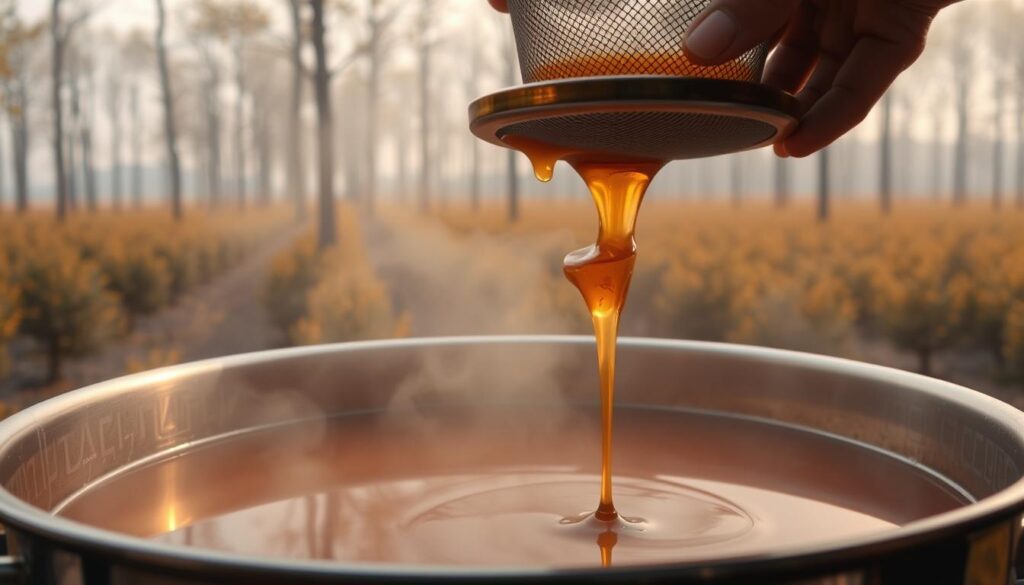
Making pure maple syrup needs careful filtering. This step removes unwanted particles, making the syrup clear. It’s key to getting syrup that’s top-notch, just like the pros make.
There are several ways to filter syrup. Choosing the right method is important. It affects the syrup’s quality and taste.
- Cheesecloth Filtering: A traditional method for removing initial impurities
- Synthetic Filter Bags: Provide more thorough particle removal
- Pressure Filtering Systems: Advanced technique for professional-grade results
Temperature is very important in filtering syrup. Experts say to filter syrup between 185-190°F. This helps remove sugar sand and minerals well.
| Filtering Method | Complexity | Effectiveness |
|---|---|---|
| Cheesecloth | Low | Basic Filtration |
| Synthetic Filters | Medium | Enhanced Clarity |
| Pressure Filtering | High | Professional Grade |
Pro tip: Always use clean, sterilized equipment. This prevents contamination and keeps the syrup’s flavor pure.
Learning to filter syrup well is key to making great homemade syrup. With practice and patience, you can make syrup that’s as good as store-bought.
Proper Storage and Preservation Techniques
Making pure maple syrup is more than just boiling. Storing it right is key to keeping its quality and taste. The right methods can make your syrup last for months or even years.
Choosing the right containers is the first step in keeping your maple syrup fresh. Glass containers are the best for maple syrup storage. They offer several important benefits:
- They don’t react with the syrup, keeping its flavor natural
- They’re easy to clean and sterilize
- They let you see the syrup’s condition clearly
Container Selection Essentials
When picking containers for making pure maple syrup, choose food-grade materials. Look for:
- BPA-free glass bottles
- Tight-sealing lids
- Dark or amber-colored containers to block light
Temperature Control Strategies
Temperature is very important for keeping homemade maple syrup fresh. Optimal storage conditions can make your syrup last longer:
- Unopened syrup: Store at room temperature
- Opened syrup: Refrigerate right away
- Long-term storage: Freeze at 0°F for longer preservation
Pro tip: Always use clean utensils when handling your syrup to avoid contamination. Label your containers with the storage date. This way, you can enjoy your homemade maple syrup at its freshest.
Common Mistakes to Avoid in Maple Syrup Making
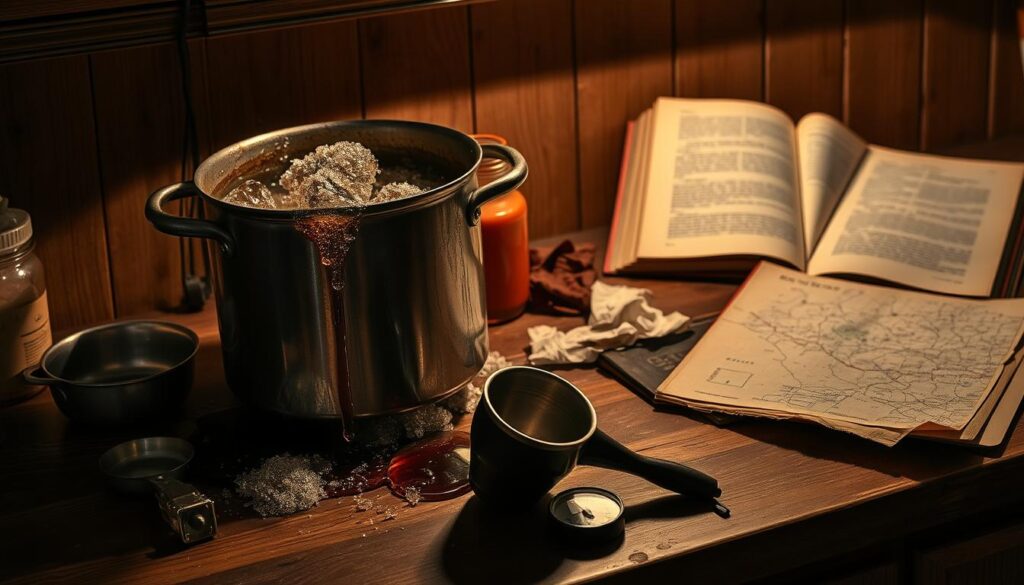
Making homemade maple syrup needs precision and attention to detail. Many new sugarmakers face challenges that can ruin their syrup. These mistakes can also harm the maple trees.
Experienced syrup makers know that avoiding big mistakes is key. These errors can affect syrup quality and tree health.
- Overtapping Trees: Too many taps on one tree can hurt its health and sap production
- Improper Sap Handling: Raw sap left too long can spoil and grow bacteria
- Inconsistent Boiling Techniques: Boiling sap too fast or slow can mess up syrup’s consistency and taste
- Poor Filtration Methods: Not filtering enough can make syrup cloudy or full of debris
“The difference between good and great maple syrup is in the details of production.” – Maple Syrup Artisan
Sugarmakers must focus on tapping techniques. Each maple tree is different, and knowing its needs is important. It’s key to space taps right and not overtap based on tree size for sustainable syrup.
Keeping the right temperature while boiling is also vital. Consistent heat and checking sugar content make sure the syrup is pure and sweet.
Scaling Your Backyard Maple Syrup Production
Expanding your backyard maple sugaring operation needs careful planning and investment. Turning small batch maple syrup production into a small business is possible with the right steps. Sugarmakers scaling up must consider several key factors for success.
Key considerations for scaling your maple syrup production include:
- Equipment upgrades for increased efficiency
- Managing larger sap volumes
- Investing in professional-grade collection systems
- Understanding local regulations for syrup sales
Upgrading your maple syrup supplies is vital as you grow. A commercial-grade evaporator can boost your production. Vacuum-assisted tubing systems also improve sap collection efficiency.
Time management is key in backyard maple sugaring. Scaling up means more complex processes and more time needed. Careful scheduling and efficient workflow are essential to maintaining product quality.
For those selling syrup, research local health department rules. Many areas have specific rules for small batch maple syrup production, like packaging, labeling, and food safety.
- Start with 20-30 taps to test scalability
- Invest in proper storage and filtering equipment
- Track your production costs and possible revenue
- Network with local maple syrup producers
Financial planning is essential. Calculate your return on investment, including equipment costs, time, and syrup market prices. Scaling up can turn a passion into a profitable small business for some sugarmakers.
Sustainable Practices in Maple Syrup Making
Backyard maple sugaring is more than just collecting sap. It’s about taking care of the environment and the trees. Making maple syrup in a sustainable way keeps trees healthy and gives us a tasty natural treat.
When you tap maple trees at home, it’s important to think about the environment. The secret to making maple syrup the right way is to respect nature.
Environmental Considerations
Sustainable maple syrup making means taking care of the planet. Here are some key steps:
- Minimize forest disturbance during tapping
- Use energy-efficient boiling equipment
- Implement responsible waste management
- Protect surrounding woodland ecosystem
Tree Health Maintenance
Keeping trees healthy is essential for making maple syrup for years to come. Using the right tapping techniques helps trees stay strong and avoid harm.
| Tree Care Practice | Benefit |
|---|---|
| Rotate tap locations | Prevents tree stress |
| Limit tap numbers per tree | Supports tree health |
| Allow recovery periods | Promotes tree growth |
Sustainable maple sugaring is about creating harmony between human production and natural forest ecosystems. By using smart practices, sugarmakers can enjoy maple syrup and protect their trees for the future.
Conclusion
Making homemade maple syrup is more than a fun cooking project. It’s a way to connect with nature’s magic. Your DIY maple syrup recipe lets you tap into an ancient tradition. It turns simple tree sap into golden syrup.
This journey requires patience, skill, and a love for natural food. It’s a deep dive into the world of maple syrup.
The process of making homemade maple syrup teaches us about nature and food. Every drop of syrup is a result of hard work and care. It shows the importance of sustainable harvesting.
By making maple syrup at home, you can turn your backyard into a sweet spot. It’s a chance to create something delicious and sustainable.
Maple syrup making is rewarding for anyone who loves food, nature, or wants to start small. It’s a skill that connects you to long-standing traditions. With time and effort, you can turn a hobby into a business or a family tradition.
Start your maple syrup adventure today. Begin small, keep learning, and enjoy the sweet fruits of your labor. The path from tree to table is filled with joy, discovery, and the taste of pure maple syrup.


