


Imagine making your breakfast better with a drizzle of flavored maple syrup. It’s a game-changer for those who love to cook. These syrups add depth and character to your morning meals.
They are made by passionate artisans who mix pure maple syrup with new flavors. Each bottle has a story of local ingredients and creativity. You can find everything from lavender to bourbon-infused syrups.
Sugarmakers in Vermont, New Hampshire, and Quebec are leading this trend. They use local herbs and spices to make unique syrups. Their work turns a simple condiment into a gourmet delight.
Infused maple syrup is perfect for anyone who loves food. It’s a way to make everyday meals special. These syrups combine old traditions with new ideas, making them a treat for food lovers.
Get ready to explore a world where sweet and sophisticated meet. Breakfast will never be the same. Your journey into infused maple syrup starts now.
What Makes Infused Maple Syrup Special
Natural maple syrup infusion is a culinary art that turns simple sweeteners into amazing flavors. It adds special ingredients to maple syrup, making it even more delicious.
The magic of maple syrup infusion is how it keeps the maple taste while adding new flavors. Sugarmakers work hard to make sure every drop is top quality.
The Art of Natural Flavor Enhancement
Making great maple syrup infusion takes skill and love. Artisan producers pick natural ingredients that go well with maple’s sweetness:
- Botanical herbs
- Warming spices
- Fruit extracts
- Organic essential oils
Traditional vs. Infused Varieties
| Traditional Maple Syrup | Infused Maple Syrup |
|---|---|
| Single-ingredient profile | Complex flavor combinations |
| Standard sweetness | Enhanced taste dimensions |
| Limited culinary applications | Versatile gourmet ingredient |
Health Benefits of Natural Infusions
Natural maple syrup infusions are not just tasty. They also have health benefits. Herbal and spice-infused varieties add antioxidants and support metabolism.
“Infused maple syrup transforms a simple condiment into a sophisticated culinary experience.” – Artisan Food Quarterly
The History and Evolution of Maple Syrup Making
The journey of organic maple syrup started long ago with Native Americans. They were the first to figure out how to turn maple tree sap into a sweet syrup. Their old ways helped shape how we make maple syrup today.
“Maple syrup is more than a food—it’s a cultural heritage passed down through generations of sugarmakers.”
At first, Native tribes used bark cuts and wooden containers to collect sap. They heated stones and added them to the sap to make syrup. This showed their deep understanding of food processing.
- Indigenous tribes first discovered maple sap extraction
- Initial collection methods used primitive tools and techniques
- Sap was transformed through creative heating processes
Later, European settlers learned from Native Americans and improved their methods. They moved from wooden tools to metal buckets and then to advanced systems. This was a big step forward in making organic maple syrup.
| Era | Collection Method | Key Innovation |
|---|---|---|
| Indigenous Period | Bark cutting, wooden containers | Stone heating technique |
| Colonial Era | Metal buckets, manual collection | Large-scale production |
| Modern Era | Vacuum systems, industrial processing | Organic certification standards |
In the 20th century, organic maple syrup became a special product. It was made with care and strict rules. This turned maple syrup into a loved natural sweetener around the world.
Understanding Different Grades of Maple Syrup for Infusion
Exploring the world of gourmet maple syrup is fascinating. It offers a wide range of flavors that can make any dish better. The different grades of maple syrup are key to finding the perfect infusion for food lovers and home cooks.
Choosing the right gourmet maple syrup for infusion is important. The color and flavor of the syrup greatly affect the taste of the final product. So, picking the right grade is a big step.
Light Amber vs. Dark Amber: A Flavor Journey
The difference between light and dark amber maple syrups is more than just looks. Maple syrup grades are based on color and flavor. This creates a world of possibilities for cooking.
- Light Amber: Has a light, sweet taste great for mild infusions
- Dark Amber: Has a strong maple taste perfect for bold infusions
Best Grades for Infusion Process
Choosing the right maple syrup grade depends on what you want to achieve. Darker syrups are better for strong flavors, while lighter ones are good for subtle herbal or spice infusions.
Quality Indicators to Look For
When picking maple syrup for infusion, look for these quality signs:
- Clarity and consistency
- Rich, pure aroma
- No crystallization or sediment
- Organic certification
Infusing maple syrup is an art that requires attention to grade, flavor, and quality. By understanding these details, cooks can turn simple maple syrup into amazing flavors.
Popular Flavor Combinations and Infusion Ideas
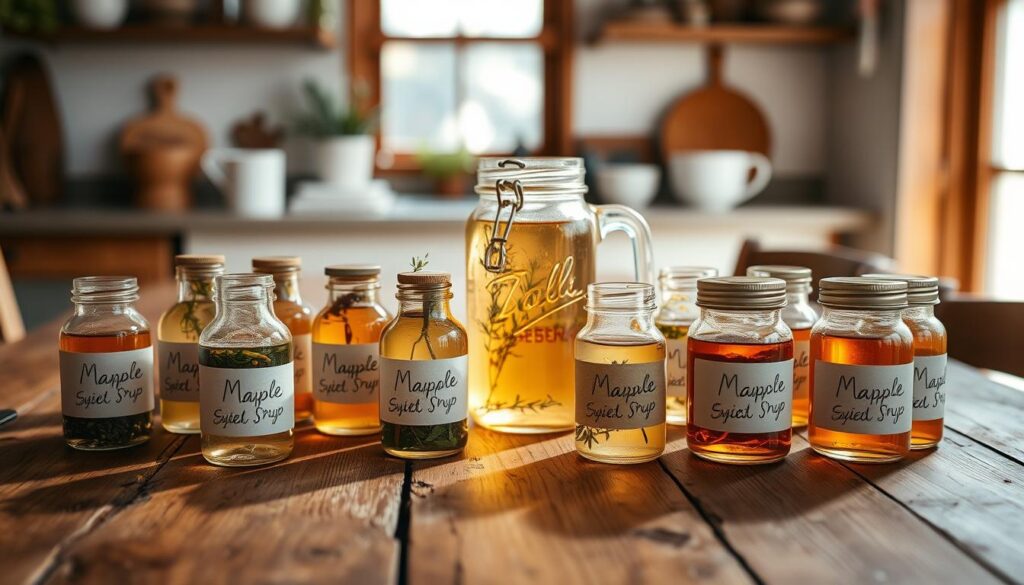
Making a unique maple syrup blend is a fun journey. It turns simple breakfasts into fancy meals. It lets food lovers try new tastes that make sweet toppings special.
Home cooks and chefs are finding new ways to mix herbs and maple syrup. They learn which herbs and spices go well with maple’s sweetness.
- Lavender: Adds a delicate floral note to maple syrup
- Rosemary: Brings an earthy, aromatic dimension
- Thyme: Introduces a subtle, herbaceous undertone
- Vanilla Bean: Creates a classic, smooth unique maple syrup blend
- Cinnamon: Provides warm, spicy complexity
Trying out these mixtures needs a careful touch. Start with small batches to get it just right. This way, the maple syrup’s natural taste can shine, with herbs adding a nice touch.
Food lovers can try new things like ginger-infused maple syrup for Asian dishes. Or sage-infused for savory breakfasts. The only limit is your creativity and desire to try new things.
“Great flavor comes from understanding ingredient interactions and respecting each component’s natural character.” – Professional Chef
Creating Your Own Infused Maple Syrup at Home
Making maple syrup infusion at home turns a simple breakfast item into a gourmet delight. Home cooks can discover new flavors by learning the art of maple syrup infusion. It’s all about using simple techniques and preparing well.
To make tasty maple syrup infusions, you need precision and creativity. You must pick top-notch ingredients and know how to infuse them correctly.
Essential Equipment Needed
- Clean glass jars with tight-fitting lids
- Fine mesh strainer
- Cheesecloth
- Sterilized storage bottles
- Digital kitchen scale
- Fresh herbs or spices for infusion
Step-by-Step Infusion Process
- Select pure, high-grade maple syrup as your base
- Choose fresh, organic flavor ingredients
- Clean and prepare infusion materials
- Combine maple syrup and chosen ingredients
- Allow mixture to steep at room temperature
- Strain and store in sterilized containers
Safety and Storage Tips
Storing your maple syrup infusion right keeps it fresh and safe. Keep it in the fridge and use it within 2-3 weeks. Always use clean tools and check for spoilage signs.
Pro tip: Begin with small batches to try out different flavors and get better at making maple syrup infusions.
Gourmet Applications Beyond Breakfast
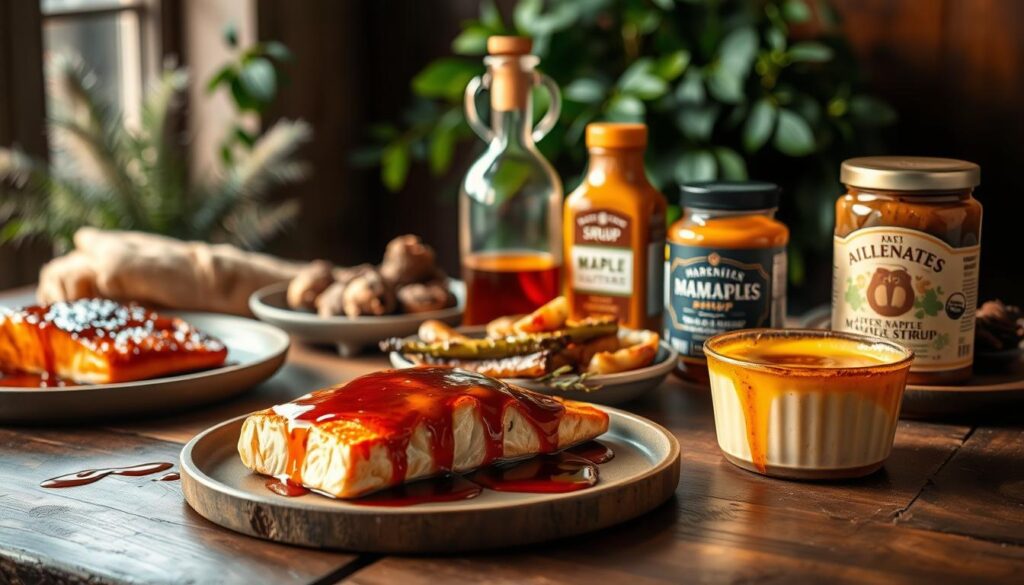
Artisanal maple syrup is more than just a breakfast item. It’s a key ingredient in many dishes, loved by chefs and home cooks. Its rich flavor makes any dish special, beyond just topping pancakes.
Chefs are finding new ways to use gourmet maple syrup in their recipes:
- Savory Marinades: Infuse meats like pork and chicken with maple-based glazes
- Cocktail Mixology: Create sophisticated drink garnishes and flavor enhancers
- Dessert Innovations: Drizzle over ice cream or use in sophisticated pastry preparations
- Salad Dressings: Blend with vinaigrettes for a sweet-tangy dimension
In professional kitchens, gourmet maple syrup is a secret ingredient. It adds depth and complexity to both sweet and savory dishes. The nuanced flavors of carefully crafted maple syrups can transform ordinary recipes into extraordinary culinary experiences.
Maple syrup is no longer just a breakfast staple—it’s a gourmet ingredient that sparks culinary imagination.
Chefs are making infused maple syrups with herbs, spices, and unique flavors. They’re making bourbon-infused maple reductions and lavender-maple glazes. Artisanal maple syrup is changing the way we cook.
Seasonal Infusion Ideas for Year-Round Enjoyment
Making flavored maple syrup is like an art journey. It turns this sweet liquid into a culinary adventure all year round. Maple syrup’s versatility lets us create unique tastes that match each season.
Seasonal infusions add vibrant flavors and excitement to your maple syrup collection. By knowing how to mix ingredients with seasonal produce, you can make your maple syrup stand out.
Spring and Summer Blends
Spring and summer are full of fresh ingredients. They’re perfect for making light, refreshing maple syrup flavors:
- Lavender-Infused Maple Syrup: Delicate floral notes perfect for summer desserts
- Strawberry-Basil Maple Syrup: A bright, herbaceous combination
- Citrus Zest Maple Syrup: Lemon or orange peel for a zingy twist
Fall and Winter Combinations
Cooler months need warming, rich maple syrup flavors. They go great with hearty dishes:
- Cinnamon-Vanilla Maple Syrup: Cozy and comforting
- Ginger-Cardamom Maple Syrup: Spicy and complex
- Maple Syrup with Roasted Pecans: Rich and nutty
Each seasonal infusion turns regular maple syrup into a special treat. It brings joy to breakfast and dessert all year.
Pairing Infused Maple Syrup with Different Foods
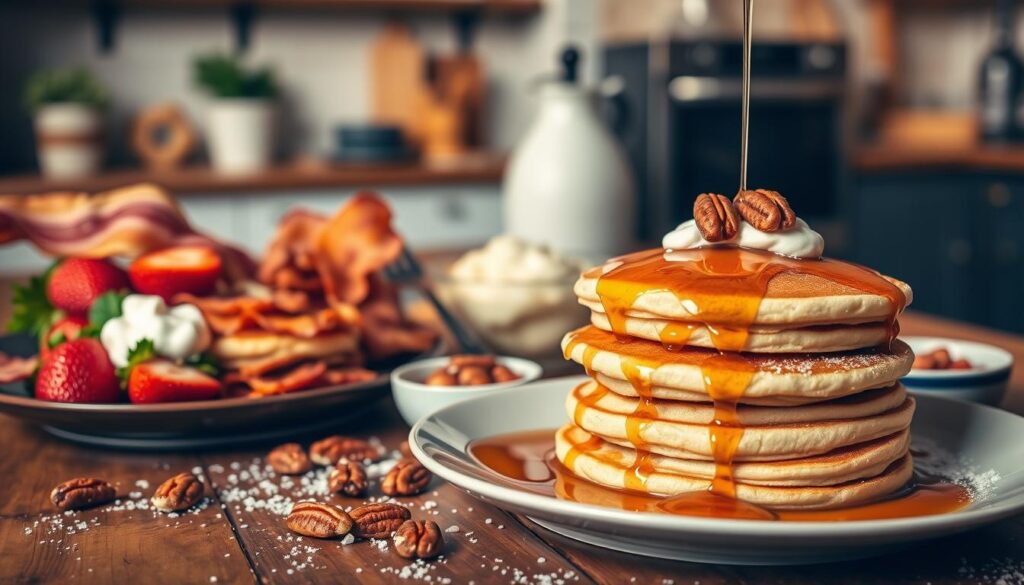
Infused maple syrup makes simple dishes into works of art. It’s perfect for both home cooks and chefs. They can create amazing flavors in many types of meals.
Sweet pairings offer a variety of tasty matches. Vanilla-infused maple syrup is great with:
- Fluffy pancakes
- Warm waffles
- French toast
- Baked desserts like apple crisp
Savory uses of infused maple syrup add a new layer of taste. Chili-infused syrups are amazing with:
- Grilled meats
- Roasted vegetables
- Glazed ham
- Barbecue preparations
Cheese lovers will love infused maple syrups on charcuterie boards. Rosemary-infused maple syrup pairs well with aged cheddar and soft goat cheese. It adds a fancy touch to the taste.
For those who like to try new things, there are many options. Try lavender-infused maple syrup on Greek yogurt or citrus-infused in smoothies. The secret is to find the right balance and let the maple’s sweetness stand out.
Artisanal and Small-Batch Production Methods
Artisanal maple syrup is the top of the line in sweet liquids. These small-batch makers turn maple harvesting into an art. They keep old methods alive while trying new things.
Artisanal maple syrup making is a mix of old ways and new tech. Small producers aim for quality, not just how much they make. Each syrup drop shows their hard work and skill.
Traditional Techniques
Traditional artisanal maple syrup making has key steps:
- Hand-tapping maple trees during peak season
- Collecting sap using classic bucket methods
- Slow-cooking sap over wood-fired evaporators
- Manual filtering and bottling processes
“Each drop of artisanal maple syrup represents generations of knowledge and passion.” – Maple Crafting Expert
Modern Innovations
Today’s artisanal maple syrup makers use new tech to improve:
- Precision temperature monitoring systems
- Sustainable forest management techniques
- Advanced sap collection technologies
- Eco-friendly packaging solutions
| Production Method | Traditional Approach | Modern Approach |
|---|---|---|
| Sap Collection | Manual bucket collection | Vacuum tube systems |
| Cooking Process | Wood-fired evaporators | Energy-efficient reverse osmosis |
| Quality Control | Visual inspection | Digital monitoring and testing |
Artisanal maple syrup makers mix old skills with new tech. They make amazing products that celebrate maple’s history.
Health Benefits and Nutritional Information
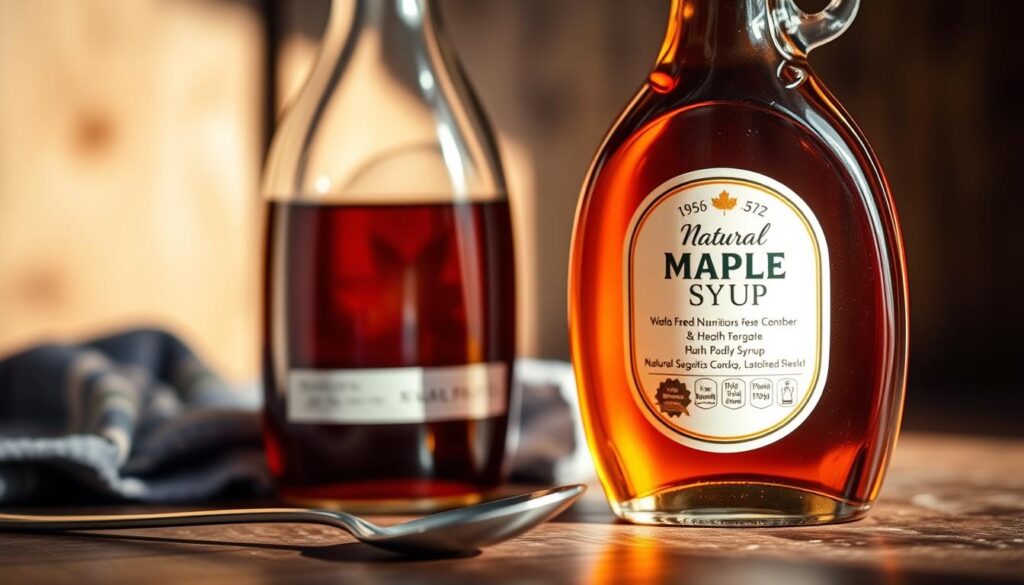
Natural maple syrup is more than a sweetener. It’s packed with nutrients that offer surprising health benefits. Each tablespoon is a mix of minerals and antioxidants that boost your well-being.
The nutritional profile of natural maple syrup is impressive. A single tablespoon gives you essential minerals for your daily needs:
- Manganese: 33% of Daily Value
- Zinc: 6% of Daily Value
- Calcium: 2% of Daily Value
- Potassium: Significant trace amounts
Studies show that organic maple syrup contains up to 24 different antioxidants. These antioxidants fight inflammation and protect cells. The main ones are benzoic acid, gallic acid, and flavanols like catechin and quercetin.
Compared to other sweeteners, natural maple syrup has a lower glycemic index. This means it raises blood sugar levels more slowly and steadily. It may also boost your immune system and support gut health.
A natural sweetener that nourishes while it satisfies – maple syrup proves that delicious can also be nutritious.
For those watching their health, organic maple syrup is a better choice than refined sugars. It adds flavor and possible health benefits to your diet.
Sustainable Practices in Maple Syrup Production
Organic maple syrup production is where caring for the environment meets old farming ways. Sugarmakers are now using green methods to keep maple forests healthy and reduce harm to nature.
Some important green practices for making organic maple syrup include:
- Responsible forest management
- Energy-efficient evaporation techniques
- Minimal invasive tapping methods
- Ecosystem preservation strategies
Keeping forests healthy is key in organic maple syrup making. Producers watch over tree health, use careful tapping, and keep the forest’s variety of life intact.
| Sustainable Practice | Environmental Benefit |
|---|---|
| Selective Tree Tapping | Reduces tree stress and promotes long-term forest health |
| Renewable Energy Use | Decreases carbon footprint during syrup processing |
| Ecosystem Preservation | Maintains wildlife habitats and forest biodiversity |
Today’s organic maple syrup makers are using new tech to save energy. Reverse osmosis systems and better evaporators cut down on fuel use. This keeps the syrup quality high.
By focusing on green practices, maple syrup makers help keep this valuable tradition alive. They also protect nature for the next generations.
Best Storage Practices and Shelf Life
Keeping natural maple syrup fresh needs careful storage. Whether you made it at home or bought it, storing it right is key. It keeps the syrup’s taste and health benefits.
Choosing the right container is very important. Glass containers are best because they:
- Keep the syrup’s flavor safe
- Are easy to clean
- Stop other tastes from getting in
Optimal Storage Conditions
Temperature and where you store it matter a lot. The best storage is between 32°F. Your fridge is perfect for storing opened syrup.
Identifying Spoilage
Always check your syrup for signs of spoilage. Look out for:
- Visible mold on the surface
- Changes in color
- Thick or grainy texture
- Bad smell
Storing it right can keep syrup good for up to two. Follow these tips to keep your syrup tasty and safe for longer.
Where to Find Specialty Infused Maple Syrups
Looking for unique maple syrup blends is now a fun journey for food lovers. This search for top-notch maple syrup leads people to many exciting places. These places celebrate the art of making maple syrup.
Local farmers’ markets are a goldmine for finding real and unique maple syrup blends. These markets let you meet sugarmakers who turn regular maple syrup into something special. Specialized food markets are also great for finding high-quality maple syrup.
- Specialty food stores featuring curated gourmet selections
- Online artisan marketplaces dedicated to small-batch producers
- Direct farm purchases in maple-producing regions
- Craft food festivals and culinary events
Online shopping has made it easier to get gourmet maple syrup. Websites from Vermont, New Hampshire, and Quebec ship top syrups to your door. You can even get a subscription to try new maple syrup flavors every month.
The magic of maple syrup lies not just in its taste, but in the story of its creation.
When picking your next maple syrup, think about how it’s made, its taste, and the maker’s dedication. Choosing small-scale sugarmakers means you get the best and most unique maple syrup out there.
Conclusion
Infused maple syrup is changing how we enjoy food, making every meal special. It brings together old maple traditions and new flavors. Whether you’re trying artisanal infused maple syrup or making your own, the choices are endless.
Exploring different ways to make maple syrup shows it’s more than just sweet. Chefs and home cooks are mixing in herbs, spices, and plants to create amazing tastes. This syrup makes even simple dishes like pancakes or desserts taste amazing.
Using infused maple syrup connects us to a long history of cooking while also embracing new tastes. Each syrup has a story of skill, creativity, and love for great flavors. It’s perfect for anyone who loves food or is a professional chef, turning simple dishes into unforgettable meals.
Infused maple syrup is all about exploring, being creative, and valuing quality ingredients. Begin your own flavor adventure by trying different syrups, experimenting in your kitchen, and seeing the incredible things you can do with this amazing ingredient.


