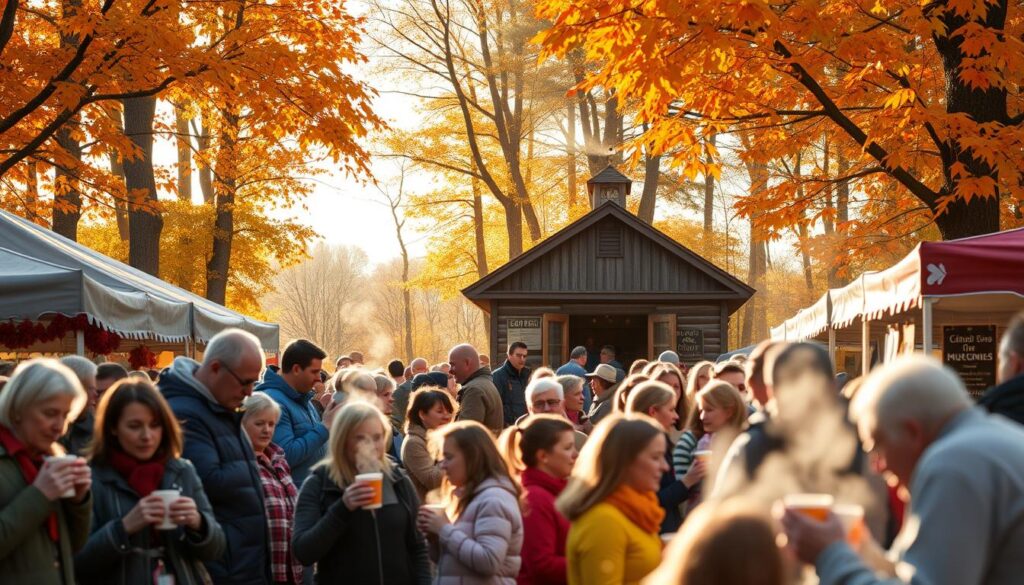

Spring brings a sweet promise to Canada, starting the Maple Syrup Festival. This beloved tradition turns maple forests into lively spots. It invites everyone to join in a special seasonal event.
Sugarmakers open their sugar shacks every year. They show how maple sap turns into golden syrup. The festival is more than food—it’s a cultural event that brings people together. It celebrates farming and welcomes spring.
Visitors get to do more than just taste maple treats. They learn about maple syrup’s history, see artisans work, and join in traditions. These activities have shaped Canadian rural life for years.
The festival is held in places like Quebec and Ontario. It shows how different areas make maple syrup. Families, food lovers, and culture seekers will find something special here.
Get ready for a fun trip through maple country. Every syrup drop shares a story of tradition, skill, and new beginnings.
Welcome to the Sweetest Time of Year
The maple syrup festival is a beloved Canadian tradition. It celebrates the start of spring in North America. It’s the time when maple trees wake up, ready to give us their sweet sap.
Maple syrup has a special place in Indigenous culture. First Nations people were the first to make syrup from tree sap. They had clever ways to collect and process sap long before Europeans came.
Historical Origins of Maple Festivals
Maple festivals started with Indigenous communities. They saw sap collection as a sacred ritual. It marked the end of winter and the start of spring.
- Indigenous peoples used wooden tools to collect sap
- Early settlers learned maple syrup techniques from Native Americans
- Traditional methods involved using hollowed-out logs and hot stones
Cultural Significance in North America
Maple syrup festivals have grown into big cultural events. They celebrate our agricultural heritage and community bonds. These festivals show off the maple syrup-making process and bring people together.
“Maple syrup is more than just a sweet treat—it’s a story of cultural resilience and natural wonder.”
Now, these festivals draw in thousands of visitors. They come to see the magic of maple syrup making. They also learn about traditional harvesting and taste fresh maple syrup.
When and Where to Experience Maple Syrup Festival
The Maple Syrup Festival is a lively event in late winter and early spring. It happens in areas famous for maple syrup. Here, people can enjoy outdoor fun and learn about maple syrup.
These festivals take place from February to April. This is when maple trees start to flow sap. It’s a time for families and maple fans to dive into authentic sugar bush experiences.
Top Festival Locations
- Vermont: Green Mountain State’s maple heartland
- Quebec, Canada: North American maple production center
- New York: Adirondack region’s maple celebrations
- Michigan: Upper Peninsula maple festivals
At these festivals, you can see tree tapping and go on nature walks. It’s a chance to learn about maple syrup and enjoy the outdoors. Plus, you can join in local events.
| Region | Peak Festival Dates | Unique Attractions |
|---|---|---|
| Vermont | Mid-March | Sugarhouse tours |
| Quebec | Late February-Early April | Traditional maple cooking |
| New York | March-April | Family maple workshops |
| Michigan | March | Maple syrup tasting events |
Every Maple Syrup Festival is special. They offer fun and learning for everyone, no matter your age.
The Art of Maple Syrup Production
Maple syrup production is a mix of nature’s magic and human skill. It goes from maple trees to golden syrup through many steps. This process has changed over time, blending old ways with new ones.
Maple trees are key in making this syrup. Turning sap into syrup needs careful work and knowing nature’s rhythms.
Traditional Harvesting Methods
For years, sugarmakers have used old methods to get sap. These include:
- Hand-tapping maple trees with special spiles
- Using metal buckets to collect sap
- Carrying sap by hand to the sugar shack
Modern Harvesting Innovations
New tech has made maple syrup making better:
- Vacuum tubing for quicker sap getting
- Tools to watch sap flow
- Bigger systems for sap collection
Sap to Syrup Transformation
| Stage | Process | Duration |
|---|---|---|
| Sap Collection | Getting liquid from maple trees | 2-4 weeks |
| Boiling | Reducing sap in evaporator | 4-6 hours |
| Filtering | Clearing out impurities | 30-60 minutes |
| Bottling | Putting syrup in bottles | 15-30 minutes |
Essential Equipment
For making maple syrup, you need special stuff. Evaporators, hydrometers, and thermometers are key. They help keep the syrup quality high.
Inside the Traditional Sugar Shack Experience
The sugar shack is a key part of maple syrup making. It’s where families have turned tree sap into syrup for years. These wooden buildings are filled with tradition, welcoming everyone to a world of maple sweetness.
Visiting a sugar shack is a unique experience. The air is warm and smells of boiling syrup. Wood-fired evaporators create a steam dance. It shows how syrup is made, passed down through families.
- Traditional wooden building with open-concept layout
- Large copper or stainless steel evaporation pans
- Wood-fired heating systems
- Collection tanks for raw maple sap
The tools in a sugar shack tell a story of change. Today’s syrup makers use old ways and new tech. This mix of tradition and modernity is interesting.
| Traditional Feature | Modern Adaptation |
|---|---|
| Hand-collected sap | Vacuum tube collection systems |
| Wood-fired evaporators | Automated temperature control |
| Manual filtering | Precision filtration equipment |
Maple syrup fans love the sugar shack. It’s not just a place to make syrup—it’s a cultural spot that links us to nature. Each shack has its own story, showing the love and skill of its makers.
Family-Friendly Activities and Entertainment
Maple Syrup Festivals turn into lively family events with fun outdoor activities for everyone. These festivals are more than just maple syrup. They offer exciting experiences for families to enjoy together.
They mix learning with fun, making sure kids and adults have a great time. Visitors get to explore maple syrup traditions in a fun way.
Children’s Workshop Activities
Young ones can take part in fun, hands-on workshops. These activities include:
- Mini tree tapping demonstrations
- Maple syrup making craft stations
- Woodland scavenger hunts
- Educational games about forest ecosystems
Live Demonstrations
Guests can see sugarmakers at work. They show off both old and new ways of making maple syrup. It’s a real look at how syrup is made.
| Activity Type | Duration | Age Recommendation |
|---|---|---|
| Tree Tapping Demonstration | 30 minutes | All ages |
| Syrup Boiling Process | 45 minutes | 8+ years |
| Traditional Tools Exhibition | 20 minutes | All ages |
Musical Performances
Local musicians add to the fun with their lively music. Families can enjoy folk tunes, regional bands, and cultural shows all day.
“Maple Syrup Festivals are more than just about syrup—they’re about creating lasting family memories!” – Local Festival Organizer
These events make sure everyone, no matter their age, has a fun and educational day. They’re all about exploring maple syrup together.
The Ultimate Pancake Breakfast Experience
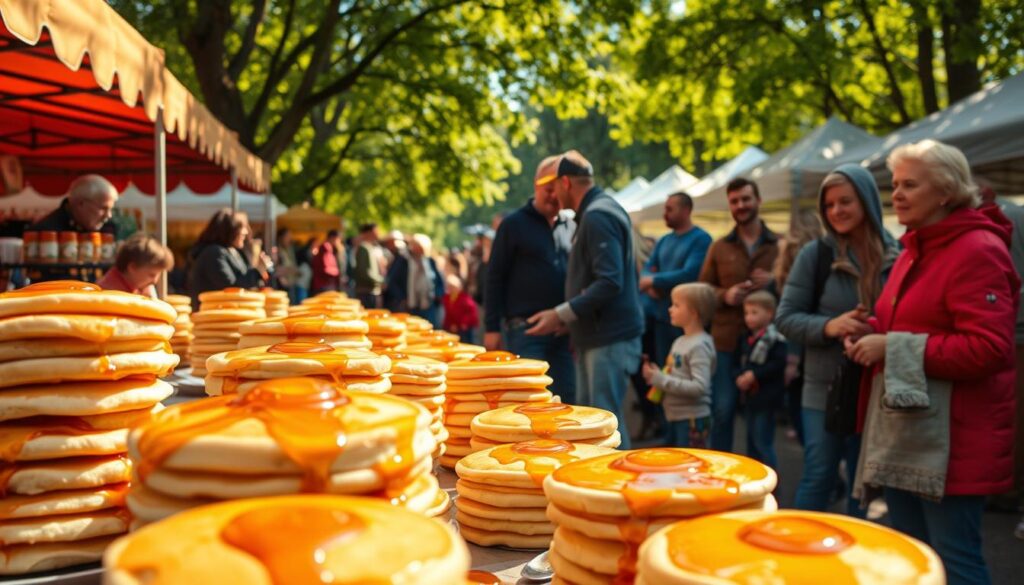
The pancake breakfast is the highlight of any maple syrup festival. It attracts people with its amazing smell and taste. Local areas turn big tents and halls into lively places for breakfast.
What makes these breakfasts special is the maple syrup. It’s made locally and poured over pancakes. The syrup adds a golden touch to the fluffy pancakes, making them even more tempting.
- Pancake breakfast serves as a community fundraising event
- Fresh maple syrup is generously used in each serving
- Breakfast typically includes multiple pancake varieties
- Local volunteers often prepare and serve the meals
This isn’t just about eating. It’s a celebration of local food traditions. Families come together to enjoy warm meals and support local producers. Every bite connects you to the maple syrup’s rich history.
“A perfect pancake breakfast is about community, tradition, and the sweetest maple syrup you’ll ever taste.”
It’s more than just great food. These breakfasts create unforgettable memories. You’ll enjoy live music, meet new people, and taste the best maple syrup.
Local Vendors and Artisanal Products
The Maple Syrup Festival turns into a lively marketplace. Here, local vendors show off their creativity and love for their craft. Visitors get to see a wide range of maple syrup products, more than just the liquid kind.
Maple-Based Products
Artisan producers bring amazing maple creations to the festival. You can find unique maple items that show how versatile this natural sweetener is:
- Maple candies and confections
- Maple-infused beauty products
- Specialty maple spreads
- Maple-glazed nuts and snacks
- Handcrafted maple cooking sauces
Craft Vendors and Local Expertise
The festival is a great place for local vendors to share their maple syrup knowledge. Passionate artisans show their skills, letting visitors connect with the makers of these special products.
Buying from these local vendors is more than just getting souvenirs. It supports local farming traditions and helps small maple syrup producers. They keep old harvesting methods alive.
Every vendor has their own story. They turn maple syrup into a celebration of food art and local heritage.
Planning Your Visit to the Maple Syrup Festival
Getting ready for the Maple Syrup Festival is all about planning. It’s key to make the most of your time at these sweet events. Timing is everything when you’re exploring the maple regions of North America.
Here are some top tips for a great festival experience:
- Purchase tickets in advance to guarantee entry
- Plan weekday visits to avoid peak weekend crowds
- Check festival websites for specific scheduling details
- Arrive early to participate in popular demonstrations
When packing for the festival, think about comfort. Wear comfy shoes, layers, and bring snacks. This way, everyone stays happy and comfortable outdoors.
The best time to visit is usually late February to early April. This depends on when maple syrup is made in your area. Sugar shacks and festival sites often have detailed calendars to help you plan.
Pro tip: Some festivals offer online reservation systems for workshops and special demonstrations.
The Maple Syrup Festival is a fun learning experience for all. Look up events that fit your family’s interests. This way, everyone will have a blast.
Educational Tours and Demonstrations
Maple syrup festivals are more than just a treat. They offer deep learning experiences. Visitors learn about maple trees and syrup making through special programs.
These events make maple syrup production real. People learn how sap turns into syrup. They discover how maple trees make this amazing sap.
Tree Tapping Workshops
Tree tapping workshops are interactive. They teach the art of getting maple sap. Participants learn important skills:
- Identifying healthy maple trees
- Proper tapping techniques
- Understanding tree health preservation
- Sustainable harvesting practices
Syrup Grading Sessions
Maple syrup grading sessions are unique. Experts show how syrup quality changes. They explain the differences in color and taste.
| Syrup Grade | Color | Flavor Profile |
|---|---|---|
| Golden | Light | Delicate, mild |
| Amber | Medium | Rich, smooth |
| Dark | Deep | Strong, robust |
These educational experiences make maple syrup special. Visitors gain a new appreciation for its making. They see it as a culinary art.
Seasonal Weather and Maple Production
The magic of maple syrup production relies on nature’s temperature dance. Maple trees need a specific weather pattern to make their sweet liquid gold. Sugarmakers know that the best maple syrup season comes from certain climate conditions that start sap flow.
Early spring is the best time for maple syrup production. This is when temperatures swing between freezing nights and warm days. This swing creates pressure in maple trees, making sap flow easier. Ideal harvesting happens when nights are 25-30°F and days are 40-45°F.
- Freezing nights build internal tree pressure
- Warm days encourage sap movement
- Short production window of 4-6 weeks annually
Climate change is a big challenge for maple syrup makers. Changing weather patterns are making maple syrup seasons shorter. Some areas see less stable temperatures, affecting maple trees’ sap production.
Innovative sugarmakers are finding ways to adapt. They use new monitoring tech, grow climate-resilient trees, and tap trees in smart ways.
Visitors to maple syrup festivals should be ready for unpredictable early spring weather. Wear layered clothes and waterproof shoes to enjoy the maple syrup experience fully.
Supporting Local Maple Syrup Producers
The maple syrup industry is a treasured Canadian tradition. It goes beyond just making food. Local vendors are key in keeping this tradition alive. They connect communities through sustainable farming and help the economy stay strong.
Buying maple syrup from local producers has a big positive effect on the economy. Rural areas get a lot of benefits from the maple syrup festivals. These festivals bring in a lot of money and help keep old farming ways alive.
Economic Contributions to Rural Communities
- Creates seasonal employment opportunities
- Generates direct revenue for local farmers
- Supports ancillary businesses like equipment suppliers
- Attracts tourism to rural regions
Sustainability Practices in Maple Syrup Production
Maple syrup production is all about finding a balance. It’s about taking care of the environment and making money. Producers use new methods to lessen harm to nature while keeping the syrup quality high.
| Sustainability Practice | Environmental Benefit |
|---|---|
| Selective Tree Tapping | Prevents forest ecosystem damage |
| Energy-Efficient Processing | Reduces carbon footprint |
| Forest Regeneration Programs | Maintains long-term forest health |
When you buy maple syrup from local vendors, you help keep this Canadian tradition alive. You also support farming that is good for the planet and keeps nature beautiful.
Photography Opportunities and Nature Walks
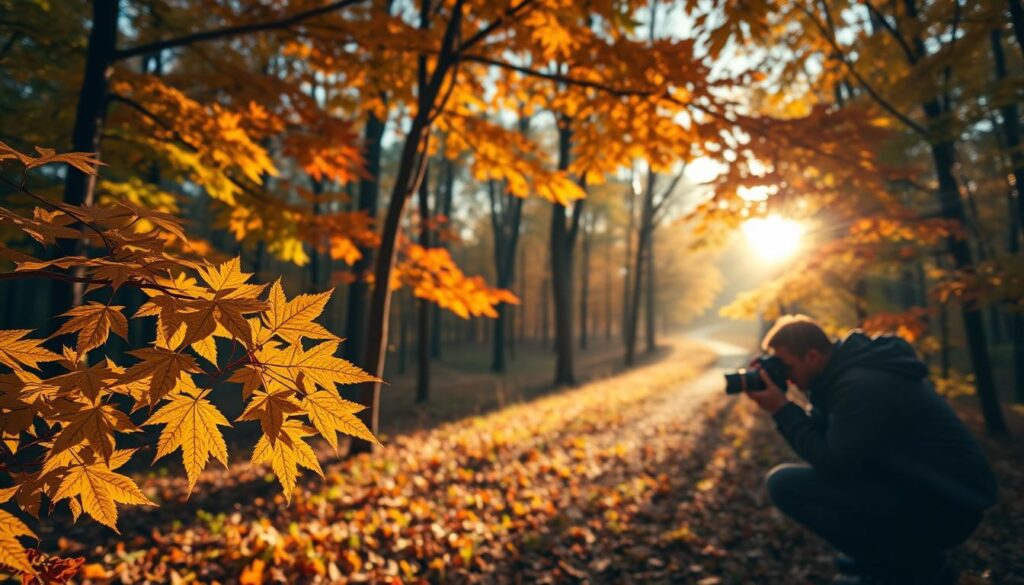
Maple syrup festivals are a dream for photographers and nature fans. The maple trees make a beautiful setting for capturing special moments in early spring. It’s a chance to see nature and culture come together in unique ways.
Both pros and hobbyists will find amazing shots at these festivals. The forests around offer perfect spots to show off rural maple syrup making.
- Best photography times: Early morning and late afternoon
- Recommended camera equipment:
- Wide-angle lens
- Tripod for stable shots
- Macro lens for detailed maple tree textures
- Ideal photography locations:
- Sugar shack exteriors
- Maple tree groves
- Sap collection areas
Nature walks add to the fun, letting you see maple tree areas up close. Guided tours teach about local plants, animals, and how to care for forests.
| Photography Focus | Recommended Techniques |
|---|---|
| Maple Tree Landscapes | Wide-angle shots, golden hour lighting |
| Sap Collection Process | Close-up macro photography |
| Festival Atmosphere | Candid human interest shots |
Capture the essence of maple syrup festivals through your lens, transforming outdoor activities into lasting memories of natural beauty and cultural heritage.
Traditional Recipe Sharing and Cooking Demos
The maple syrup festival is a place where Canadian tradition meets new cooking ideas. Visitors get to see how versatile maple syrup is through fun cooking demos. These demos show off both old and new ways of using maple syrup in food.
Culinary experts show how maple syrup connects old and new cooking methods. They share both classic family recipes and modern dishes. This journey through maple syrup dishes is a treat for the taste buds.
Classic Maple Dishes
Traditional maple syrup recipes are key to Canadian cooking. Chefs show how to make dishes that use maple syrup’s natural sweetness and depth.
- Maple-glazed ham with a rich, caramelized coating
- Hearty maple baked beans
- Maple sugar pie
- Traditional maple candy
Modern Culinary Applications
Modern chefs explore new ways to use maple syrup in food. They create dishes that amaze and delight everyone at the festival.
| Culinary Category | Maple Syrup Application |
|---|---|
| Cocktails | Maple old fashioned |
| Desserts | Maple crème brûlée |
| Savory Dishes | Maple-glazed salmon |
Every cooking demo turns maple syrup into a key ingredient in food. People learn how to use this Canadian tradition in many recipes. They discover the amazing flavors maple syrup can add to dishes.
“Maple syrup is not just a sweetener, it’s a cultural storyteller on a plate.” – Local Chef
What to Wear and Bring
Getting ready for the Maple Syrup Festival is all about planning. Spring weather can change fast, so it’s smart to wear layers. This way, you can stay comfy while enjoying the outdoors.
Here’s what to wear for a day of maple syrup fun:
- Waterproof jacket or rain shell
- Comfortable walking shoes or waterproof boots
- Warm, moisture-wicking base layers
- Light sweater or fleece for temperature changes
Don’t forget to pack these must-haves for your festival trip:
- Reusable shopping bag for maple product purchases
- Cash for local vendors
- Refillable water bottle
- Sunscreen and hat
- Camera or smartphone for capturing memories
Tip for families: Bring small snacks and fun activities for kids during downtime. Portable games or coloring books are great choices.
Stay comfy and ready for a great time at the Maple Syrup Festival. With the right clothes and gear, you’ll have a blast exploring all the outdoor fun.
Transportation and Parking Information
Going to the Maple Syrup Festival means you need to plan your trip well. You have many choices to make your visit smooth and fun.
Driving is the best way to get there because it gives you freedom. Arrive early to find the best parking spots. The parking areas are easy to find and close to the festival.
- Free parking available at designated festival lots
- Shuttle services from remote parking areas
- Accessible parking for visitors with mobility challenges
Using public transport is a green choice for festival-goers. Many places have:
- Direct bus routes to festival entrances
- Less parking congestion
- Good for the environment
Carpooling helps reduce traffic and supports green practices. Sharing rides can get you better parking and discounts.
Pro tip: Check the official festival website for real-time parking updates and transportation recommendations.
Festival organizers make sure everyone can have fun. There are special parking spots for those with special needs. This way, everyone can enjoy the Maple Syrup Festival’s outdoor activities.
Conclusion
The Maple Syrup Festival is more than a seasonal event. It’s a key part of Canadian culture that links people to North America’s rich farming history. These festivals give a peek into how maple sap turns into golden syrup. They show the careful mix of nature and human skill.
Going to a Maple Syrup Festival is more than just fun. You learn about green farming, help local farmers, and value the hard work needed to make maple syrup. You see tree tapping, taste maple treats, and see how people connect with the land.
These festivals are a chance for all ages to dive into a tradition that has shaped rural areas for ages. You can try maple goodies, watch how syrup is made, or explore sugar bush areas. It’s a way to make memories that celebrate nature, culture, and food.
The Maple Syrup Festival shows the strong spirit of farming communities. It welcomes everyone to see the wonder of maple making and the friendly welcome of these special events.