Maple syrup is more than a sweetener. It turns simple meals into unforgettable dishes. The Maple Syrup Test shows why food lovers seek the best bottle.
Finding the right maple syrup can make any dish better. Each bottle shares a story of local skill, old traditions, and natural flavors. The quality test highlights what makes some syrups stand out.
Experts have tested many maple syrups to find the best. They looked at color, thickness, taste, and how it’s made. They aimed to find the top syrups for us to enjoy.
This test shares secrets of top maple syrups. It covers everything from Vermont’s famous makers to Canadian small-batch producers. You’ll learn what makes premium syrups special.
The test doesn’t just taste syrups. It dives into how maple syrup is made, grading, and local differences. You’ll learn how to pick the best syrup for your cooking.
Whether you cook at home, professionally, or just love maple syrup, this guide is for you. It’s your key to finding the best syrups. Get ready to see maple syrup in a whole new light.
Understanding Pure Maple Syrup: From Tree to Table
Maple syrup production is a delicate art that turns tree sap into a liquid gold loved by food lovers everywhere. The quality of maple syrup starts in the forest, where maple trees hold the secret to this natural sweetener.
The journey from tree to bottle is complex. It needs precise conditions and expert knowledge to get the purest, most flavorful syrup.
The Science of Sap Collection
Sap collection is a precise science that depends on specific environmental conditions. The best time to collect sap is when nights are cold and days are warm, usually in early spring.
- Optimal collection temperature: 40-45°F
- Best collection period: Late February to early April
- Average tree produces 10-20 gallons of sap per season
Processing Methods and Their Impact
The transformation of raw sap into maple syrup is critical. It involves techniques that affect its quality and flavor.
| Processing Method | Impact on Syrup Quality |
|---|---|
| Traditional Boiling | Preserves complex flavor notes |
| Reverse Osmosis | Increases production efficiency |
| Wood-Fired Evaporation | Adds subtle smoky undertones |
Traditional vs Modern Production Techniques
Maple syrup production has evolved, mixing old traditions with new technology. Traditional methods use manual labor and wood-fired evaporation. Modern techniques use advanced equipment for better precision and yield.
“Maple syrup is nature’s most perfect food. It’s a connection between the forest and our table.” – Maple Syrup Producer
Each method adds unique qualities to the syrup. This makes maple syrup a symbol of natural beauty and human skill.
The Official Maple Syrup Grading System Explained
Maple syrup grading is key to understanding its quality. The USDA has a system to help people know the differences in maple syrup. This system makes it easier to pick the right syrup for your taste.
The color of maple syrup tells us a lot about its taste. There are four main grades, each with its own flavor:
- Golden Color, Delicate Taste: Lightest grade with mild maple flavor
- Amber Color, Rich Taste: Slightly darker with more pronounced maple notes
- Dark Color, Robust Taste: Deep amber with intense maple flavor
- Very Dark Color, Strong Taste: Darkest grade with most concentrated flavor
The syrup’s color and taste come from how much light it lets through. Sugarmakers watch these closely to keep the syrup’s quality high.
“Color is not just about appearance—it’s a direct indicator of flavor complexity in maple syrup.” – Maple Syrup Expert
With this grading system, you can pick maple syrup that fits your cooking needs. Whether you want something light or something bold, you can find it.
Our Complete Maple Syrup Test Methodology
Testing maple syrup quality needs careful planning and exact science. Our maple syrup test aimed to show how we checked different brands in detail. We wanted to give readers a deep look into our process.
We aimed to make our test clear and fair. We used a detailed method to check each syrup sample well.
Testing Parameters and Controls
We set clear rules for our test to keep it consistent and reliable:
- Standardized sampling techniques
- Controlled tasting environment
- Blind evaluation process
- Calibrated measuring equipment
“Precision is the cornerstone of any meaningful scientific evaluation.” – Culinary Research Institute
Scoring System Overview
We made a detailed scoring system to judge maple syrup:
- Color intensity (20 points)
- Flavor complexity (30 points)
- Aroma profile (20 points)
- Viscosity and texture (15 points)
- Overall authenticity (15 points)
Brand Selection Criteria
We picked brands based on variety and fairness. We chose maple syrups from all over, including small makers and big companies.
We looked at where they came from, how they were made, and their market presence. This helped us show the full range of maple syrup production.
Color Analysis: From Golden to Very Dark
Maple syrup color tells a story of flavor and quality. The grading system sorts syrup into different colors. Each color grade has its own taste and uses in cooking.
Sugarmakers use a standard way to check syrup color. They look at how light passes through and the syrup’s appearance. The grades range from light to dark, each with its own taste.
- Golden Color (Delicate Taste): Lightest grade with subtle, mild flavor
- Amber Color (Rich Taste): Slightly deeper hue with more pronounced maple notes
- Dark Color (Robust Taste): Intense flavor with deeper caramel undertones
- Very Dark Color (Strong Taste): Deepest shade with most concentrated maple essence
The color of maple syrup changes as it boils. Heating the sap makes it darker. This change also makes the syrup’s flavor stronger.
Cooks choose maple syrup colors for their recipes. Lighter syrups are good for baking. Darker syrups are better for strong flavors in marinades and glazes.
Sensory Evaluation: Aroma and Flavor Profiles
Maple syrup is more than just sweet. Experts use special techniques to find what makes each syrup unique. The flavors show the land and how it was made.
Experts use a detailed method to check the syrup’s flavors. They learn to spot flavors that most people miss.
Sweet and Vanilla Notes
Light maple syrups have soft flavors:
- Gentle vanilla undertones
- Smooth, delicate sweetness
- Subtle floral hints
Woody and Caramel Undertones
Darker syrups have stronger tastes:
- Rich caramel-like essence
- Deep woody characteristics
- Intense roasted notes
Mineral and Complex Flavors
Premium syrups have amazing flavors:
- Earthy mineral backgrounds
- Subtle smoky impressions
- Nuanced botanical undertones
Knowing these flavors makes maple syrup special. It’s not just a sweetener but a gourmet treat. It invites fans to dive into its rich taste world.
Viscosity and Consistency Measurements
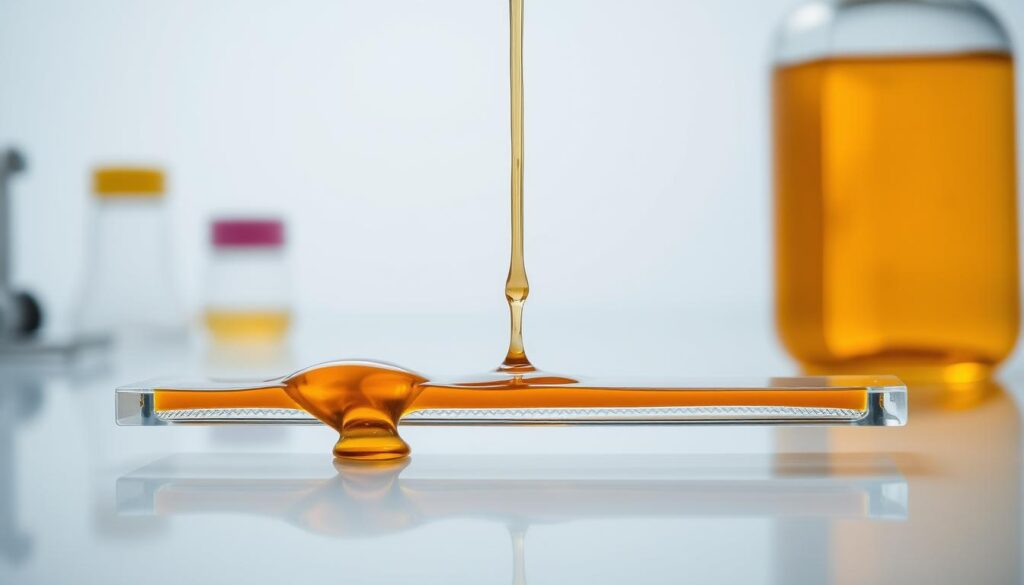
Testing the viscosity of maple syrup is key in evaluating its quality. Sugarmakers know that syrup’s texture is not just about taste. It shows the syrup’s quality and how well it was made.
The syrup’s viscosity depends on several important things:
- Sugar concentration
- Temperature during production
- Boiling duration
- Mineral content
Experts use special tools to measure syrup viscosity very accurately. The process includes:
- Heating the syrup to a standard temperature
- Using viscometers to analyze flow characteristics
- Comparing results against established quality standards
“Viscosity is the silent storyteller of maple syrup’s journey from tree to table” – Maple Science Institute
Checking syrup quality is more than just checking its thickness. Testers look for a specific consistency that shows good processing. The syrup should flow smoothly, coating a spoon well without being too thin or thick.
Different maple syrup grades have slight differences in viscosity. Darker syrups usually have more complex viscosity profiles than lighter ones.
Sugar Content and Density Analysis
Maple syrup quality is checked with precise science, not just taste. Pure maple syrup’s makeup shows its true quality and skill. Sugarmakers use special methods to check its sugar and density, making sure it’s top-notch for buyers.
Checking maple syrup starts with its sugar mix. The Brix scale is key for measuring sugar levels. It tells us about the syrup’s quality and what makes it special.
Brix Measurement Results
Experts use Brix to find out how sweet maple syrup is. The best Brix for pure maple syrup is between 66 and 68 degrees. This shows:
- Just the right amount of sugar
- Perfect density
- True maple syrup
Crystallization Tendencies
How maple syrup forms crystals matters a lot. Sugar levels and where it’s stored affect this. Syrups with more sugar are less likely to get crystals.
Here’s how to keep syrup from getting crystals:
- Keep the temperature steady
- Store it in sealed containers
- Don’t let the temperature change a lot
Pro sugarmakers watch these details closely. They want to make sure the maple syrup they sell is the best.
Premium vs Budget Brands: Price-Quality Correlation
The maple syrup market offers many price choices. Our thorough maple syrup test showed that price doesn’t always mean better quality. It’s important to know how to evaluate maple syrup quality to make smart choices.
We found several important factors that affect maple syrup prices:
- Production scale and method
- Harvesting location
- Complexity of processing techniques
- Brand reputation
Premium brands often cost more because of:
- Artisanal production methods
- Small-batch processing
- Specialized harvesting techniques
- Organic certification
Our maple syrup test showed some surprising facts. Some affordable brands had flavors and quality as good as pricier ones. It’s not always true that more expensive means better taste or purity.
Quality maple syrup is determined by craftsmanship, not just price tag.
Things like sugar content, color, and where it’s made are key to maple syrup’s value. If you’re watching your budget, look closely at what you’re getting. Knowing about grading standards can help you find great syrup without spending a lot.
Regional Variations in Maple Syrup Production
Maple syrup quality shows how geography affects its taste. Each area adds its own flavor and making methods. This creates a wide range of tastes and ways to make it.
Maple syrup is made in many places, each with its own special touch. Sugarmakers use the local environment to make top-notch syrup.
Vermont: The Maple Syrup Heartland
Vermont is known for its maple syrup. Its climate and soil make the syrup taste unique. This makes Vermont syrup stand out.
- Climate supports optimal sugar maple tree growth
- Rigorous quality control standards
- Long-standing tradition of maple syrup production
Canadian Maple Syrup Imports
Canada, mainly Quebec, makes most of the world’s maple syrup. They follow strict rules to make sure their syrup is always high quality.
- Quebec produces over 70% of world’s maple syrup
- Strict grading and classification systems
- Advanced harvesting technologies
Emerging US Maple Syrup Regions
New places in the US are also making maple syrup. States like New York, Michigan, and Pennsylvania are creating new flavors. They’re competing with the old favorites.
Regional variations show more than just geography. They show the creativity and love of local sugarmakers in making this special sweetener.
Authenticity Testing: Identifying Pure Maple Syrup
It’s important to know if maple syrup is real or not. A test can tell the difference between real and fake syrup. Real maple syrup has certain signs that make it stand out.
Testing maple syrup purity involves several steps:
- Checking its color and texture
- Tasting and smelling it
- Lab tests
- Measuring sugar levels
At home, you can test maple syrup too. The best way is to see how it acts when heated. Real syrup stays smooth and doesn’t turn grainy like fake syrup does.
Signs of real maple syrup include:
- A label that says “pure maple syrup”
- It’s thick and smooth
- It tastes complex with a hint of wood
- It’s a natural amber to dark brown color
But there’s more to testing syrup than just looking at it. Labs use special tools like:
- Isotope ratio mass spectrometry
- Nuclear magnetic resonance testing
- Advanced chemical tests
Knowing how to check syrup helps you choose the good stuff. It keeps you away from bad imitations.
Top Performing Brands and Their Characteristics
Our detailed maple syrup quality check found top brands that really stand out. The Maple Syrup Test showed big differences among the best makers. It opened our eyes to the rich world of artisanal maple syrup.
We looked at many factors to find the best maple syrups. Our team carefully checked flavor, color, and quality. This helped us pick the winners.
Premium Category Champions
In the premium category, some brands really shined:
- Runamok Maple from Vermont was a top pick, known for its complex flavors
- Stonewall Kitchen’s organic maple syrup was praised for its rich, steady taste
- Crown Maple from New York was noted for its pure and deep flavor
Best Value Selections
For those watching their budget, there are great maple syrup choices:
- Butternut Mountain Farm offers great value and quality
- Coombs Family Farms gives excellent maple syrup at a good price
- Anderson’s Pure Maple Syrup offers real flavor without costing too much
The quality check showed that great taste doesn’t always mean high price. There are many excellent choices for all budgets.
Culinary Applications and Taste Test Results

Maple syrup is more than just sweet. Chefs and home cooks love its unique flavors. Our detailed study showed how maple syrup changes the taste of food.
Maple syrup is great for more than just pancakes. Chefs found it adds amazing flavors to both sweet and savory dishes.
- Baking: Dark maple syrups provide rich, complex notes in cakes and cookies
- Marinades: Medium-grade syrups create exceptional glazes for meats
- Cocktails: Light syrups add delicate sweetness to mixed drinks
- Salad Dressings: Mineral-rich syrups complement vinaigrette compositions
Our taste tests showed big differences in maple syrup grades. Chefs liked syrups with deeper, truer flavors.
| Maple Syrup Grade | Culinary Best Use | Flavor Intensity |
|---|---|---|
| Golden | Delicate Desserts | Mild |
| Amber | Baking, Breakfast | Moderate |
| Dark | Robust Cooking, Marinades | Strong |
| Very Dark | Industrial Cooking | Intense |
Professional tip: Always match maple syrup grade to your specific culinary application for optimal flavor enhancement.
Storage and Shelf Life Considerations
Keeping maple syrup in the right place is key to keeping its quality and taste. Knowing how to store it helps it last longer and stay fresh.
For storing maple syrup, the temperature and the container matter a lot. Unopened syrup can stay at room temperature in a cool, dark spot. But once you open it, you need to keep it in the fridge to stop bacteria and keep its taste pure.
- Store unopened maple syrup in a sealed glass or plastic container
- Refrigerate after opening to extend shelf life
- Keep away from direct sunlight and heat sources
- Check for signs of mold or fermentation before use
Maple syrup can stay good for 12-18 months if stored right. Glass containers are best because they don’t let flavors mix and make mold easy to spot.
“The key to preserving maple syrup’s exceptional flavor is protecting it from temperature fluctuations and possible contaminants.” – Maple Syrup Preservation Expert
If you see mold on the syrup, don’t throw it all away. Just take off the moldy part. Heat the syrup to 185°F (85°C) to kill bacteria. Then, cool it down and put it in the fridge.
Storage Temperature Guide
| Storage Location | Expected Shelf Life |
|---|---|
| Pantry (Unopened) | 12-18 months |
| Refrigerator (Opened) | 6-12 months |
| Freezer | Indefinite |
By following these tips, maple syrup lovers can keep their syrup fresh and ready for cooking.
Environmental and Sustainability Factors
The maple syrup industry is at a crossroads. It balances tradition with caring for the environment. Today, sustainable practices are key for producers in North America. Climate change and nature’s health are now big factors in making maple syrup.
Looking at maple syrup’s purity goes beyond just taste and color. It also looks at how it affects the environment. Producers are finding new ways to reduce harm to nature while keeping their syrup top-notch.
Eco-Friendly Production Techniques
- Energy-efficient evaporation systems that reduce wood consumption
- Solar-powered sugar houses
- Minimized forest disturbance during sap collection
- Water conservation methods in syrup processing
Sustainable Harvesting Practices
Today’s sugarmakers use new methods to protect maple forests. They want to keep these forests healthy for the future. Here’s what they do:
- Careful tree selection for tapping
- Limiting tap holes per tree
- Rotating tapping locations
- Monitoring forest health and biodiversity
Climate adaptation strategies are becoming critical for maple syrup producers. Warmer winters and changing weather patterns make old ways hard to keep up. So, the industry is moving towards better, greener ways.
Sustainability is not just an option—it’s a necessity for the future of maple syrup production.
By choosing syrup from eco-friendly producers, we can help. This supports the industry’s green efforts.
Conclusion
Our Maple Syrup Test uncovered key insights into this beloved natural sweetener. It went beyond taste, looking at the quality of maple syrup in many ways. We found that top maple syrup is a mix of old traditions and new techniques.
Our research showed big differences between brands. The best ones use careful sap collection and green practices. Now, people know how to pick the best maple syrup, making better choices.
Regions like Vermont and Canada have their own special maple syrups. These syrups show off the area’s unique taste. It’s not just about flavor; it’s also about the environment and tradition.
We encourage you to dive into the world of maple syrup with a new eye. Choose syrups that taste great and are made responsibly. Exploring maple syrup is a journey of taste, tradition, and caring for the planet.